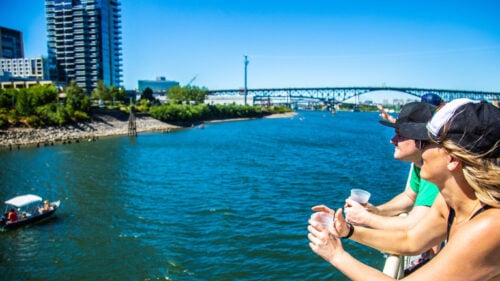


While waterfront pathways make for scenic strolls or bike rides, there’s no better way to appreciate Portland’s central waterway than from the water itself. And when it comes to sailing the waters of the Willamette, no one does it better than the Portland Spirit. Beloved among visitors and locals, a Portland Spirit adventure gives visitors a unique perspective on some of the city’s most renowned landmarks, accompanied by delicious cuisine, live music and onboard narration.
No matter which cruise you choose, whether it’s a sunset dinner outing or a Champagne brunch, you know you’re in for breathtaking views of the Willamette’s bridges, wildlife-rich islands and Portland’s epic skyline. You’ll also get to spot some unexpected features along the way that give you a deeper glimpse into local history, culture and nature.
See Portland History at the Palatine Hill Pumping Station
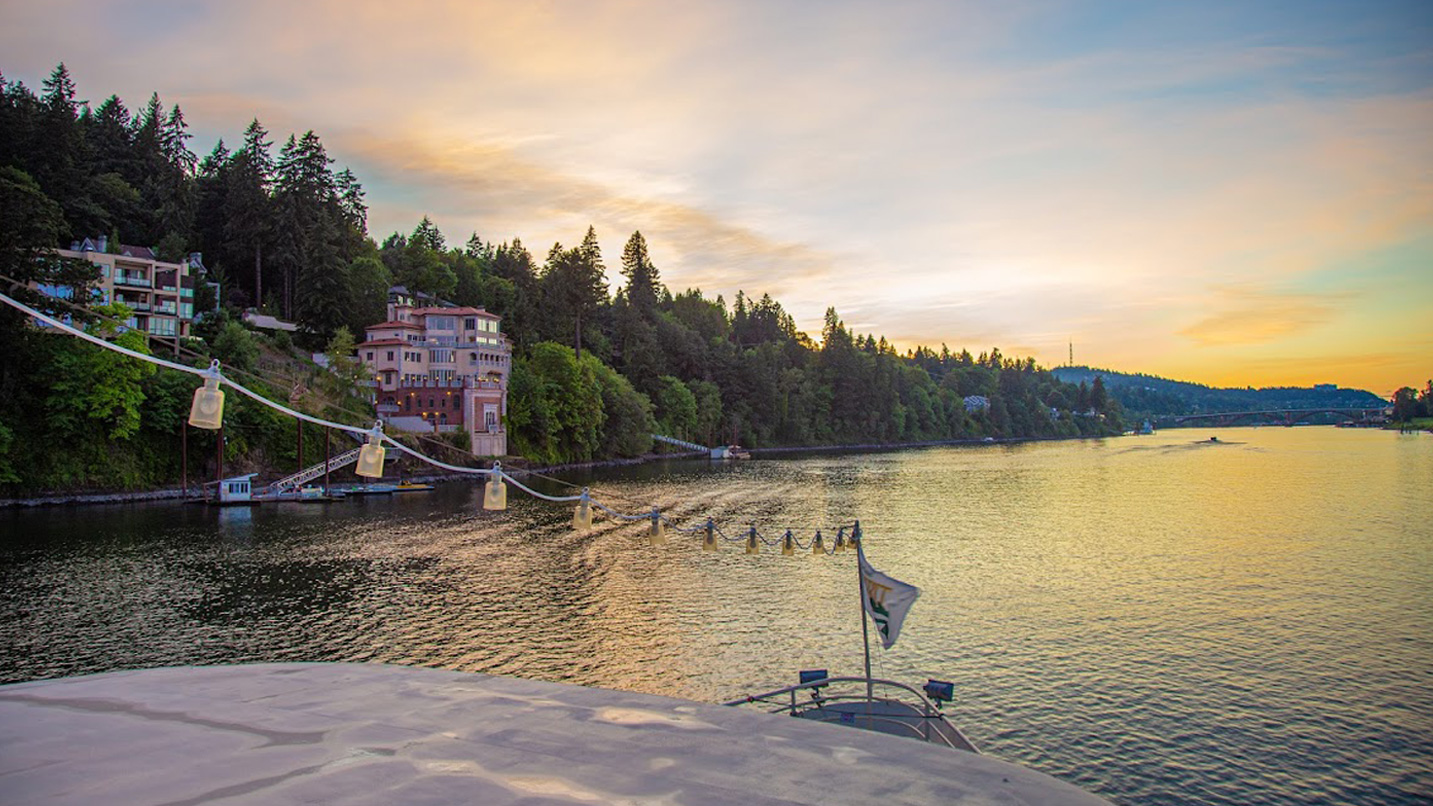
Oohing and aahing at the opulent mansions of Dunthorpe is one of the highlights of a Happy Hour Sightseeing cruise, and there’s one in particular that’s always a standout. A rosy-hued, Old World-esque vision crowned with terra-cotta tiles, this villa-style mansion looks like it’d be more at home on the shores of Lake Como. Hugging the wooded hillside and set apart from the more modern homes lining the shores, its striking design makes it a favorite sighting while sipping refreshing drinks and enjoying happy-hour bites on the 1.5-hour cruise.
But looks can be deceiving. While this palatial property is now an exclusive private residence, it was once a crucial piece of Portland-area industrial history: the Palatine Hill Pumping Station. First unveiled in 1883, this site used to house a water-pumping station that channeled a whopping 16 million gallons of water a day to satisfy the thirst of the rapidly growing nearby city. By supplying essential water for local needs like construction and residential use, it helped Portland blossom into the metropolis it is today. But you’d never know it at first glance.
Imagine Geologic Time at Elk Rock Island
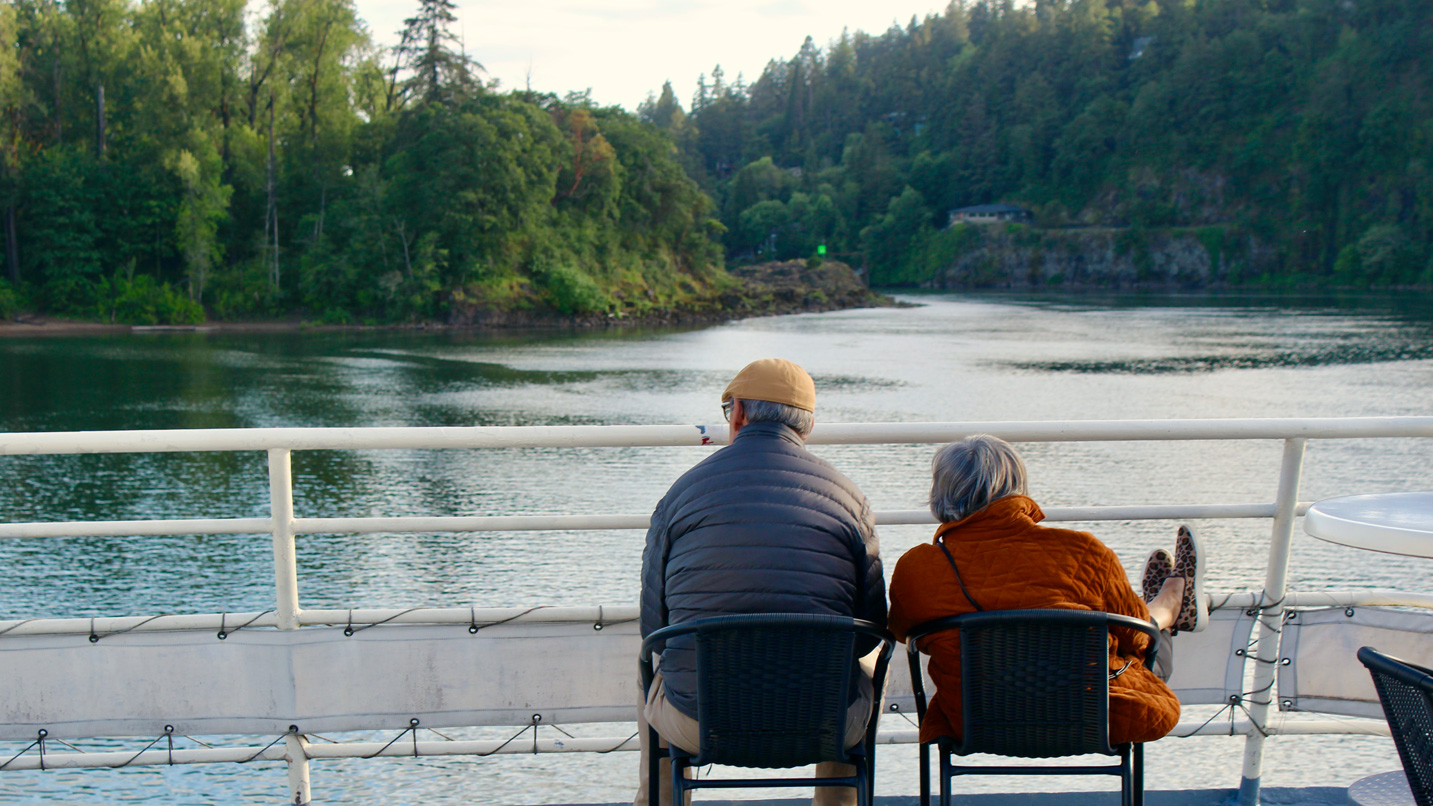
Just south of Milwaukie, the Willamette River squeezes past a lopsided peninsula that juts out into the current. That peninsula is Elk Rock Island. At certain times of the year, high waters cut off this tiny isle from the mainland, but otherwise, outdoor enthusiasts can easily access the 13-acre spit of land for short hikes and beach visits.
It may not immediately draw the eye, but it’s well worth watching out for while on a Sunset Dinner or Bridgetown Lunch cruise. Why? This tiny isle is what remains of a volcano that erupted roughly 40 million years ago. The large, black clumps of lava-formed rocks rimming the shore? They’re believed to be some of the oldest exposed rock found anywhere in the Portland area. Imagine that: While sailing along, sipping a glass of Willamette Valley wine and dining on seasonal Pacific Northwest fare, you can casually look millions of years into the past just by glancing out the window as Elk Rock Island glides by.
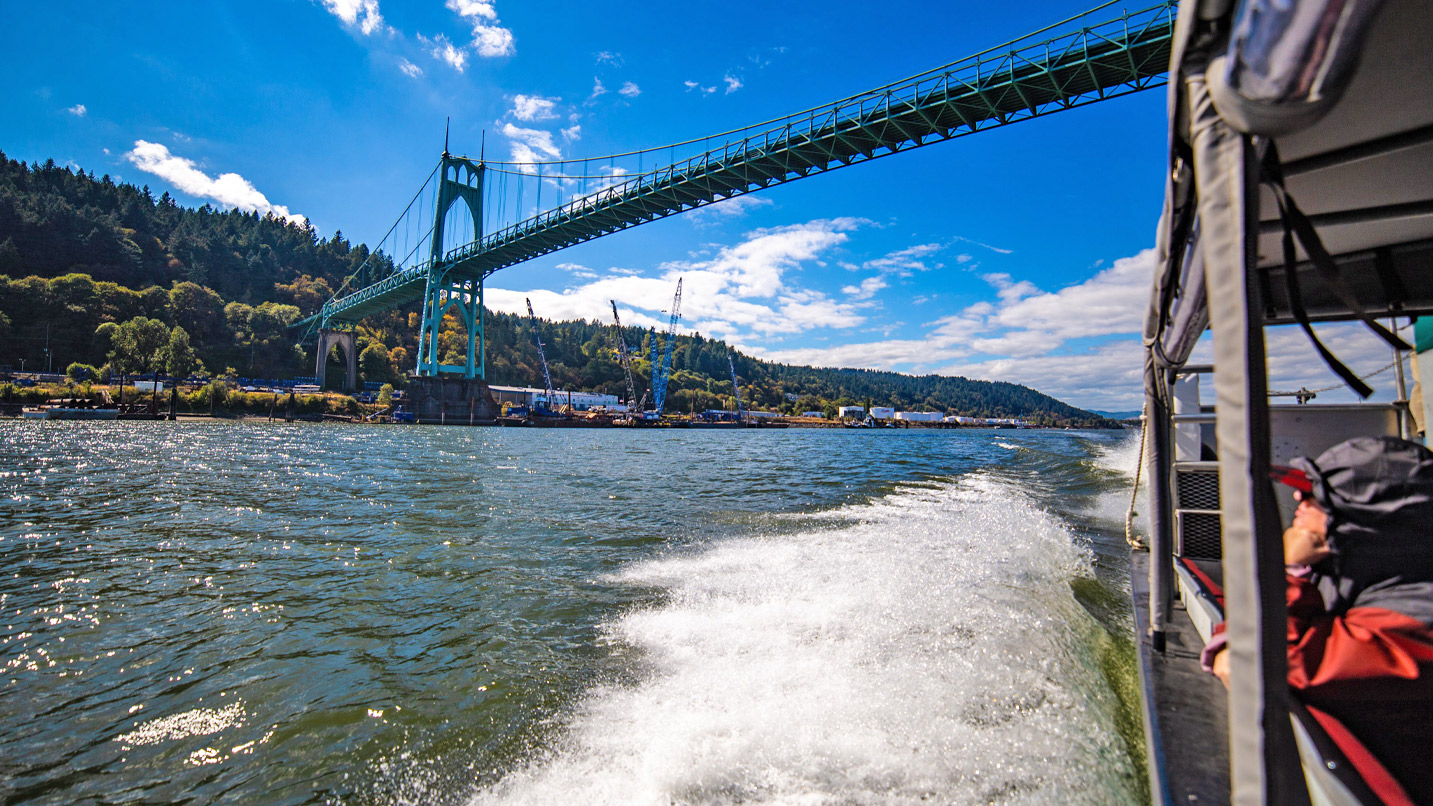
Set Sail Past Swan Island Shipyards
For a thrill-packed outing, nothing beats a 7 Wonders of the Gorge jet-boat tour up the Columbia River, which whisks you past some of the Gorge’s grandest sites from Multnomah Falls to Rooster Rock. But before you get to the canyon’s waterfall-lined walls, the 3.5-hour tour first travels past an often-overlooked relic of Portland history.
Shortly after zooming under the Fremont Bridge, look to your right; the industrial area may not look like much at first, but then you reach the Swan Island Shipyards. Over the years, this area has worn many hats. It was the site of Portland’s first airport, where Charles Lindbergh flew in for a visit in 1927. Then, in World War II, it became a Kaiser-operated shipbuilding yard, helping produce over 100 tankers. Today that legacy lives on: You can still see ships being worked on or built as you ride by, giving you a glimpse into Portland’s past as a major port.