



Ash hurls overhead while lava projects down the mountain in glowing ribbons. The ground beneath flashes and rumbles with heat and motion. You’ve landed smack dab in a volcanic eruption. At least, that’s what it feels like inside the High Desert Museum, where the high desert’s volcanic narrative comes to life.
“Under Pressure: A Volcanic Exploration” at Bend’s High Desert Museum opens February 7, 2026, and runs through January 3, 2027. This exhibition turns the region’s volcanic past and present into an immersive experience, igniting wonder and curiosity for all ages. Visitors can experience dramatic visuals, hands-on displays and interactive maps, often presented in arcade machine-shaped cases and with neon colors for a retro 1980s vibe.
Visitors will get the chance to handle volcanic rocks, from smooth and glassy to rough and gritty. Objects made from those materials bring the human side of the story to life. Dive into displays and maps that crack open the story of the region, inviting more than a few, “Wait, what, wow!” moments about the dramatic volcanic forces that shaped the region — and continue to shape it today.
Living With Volcanoes
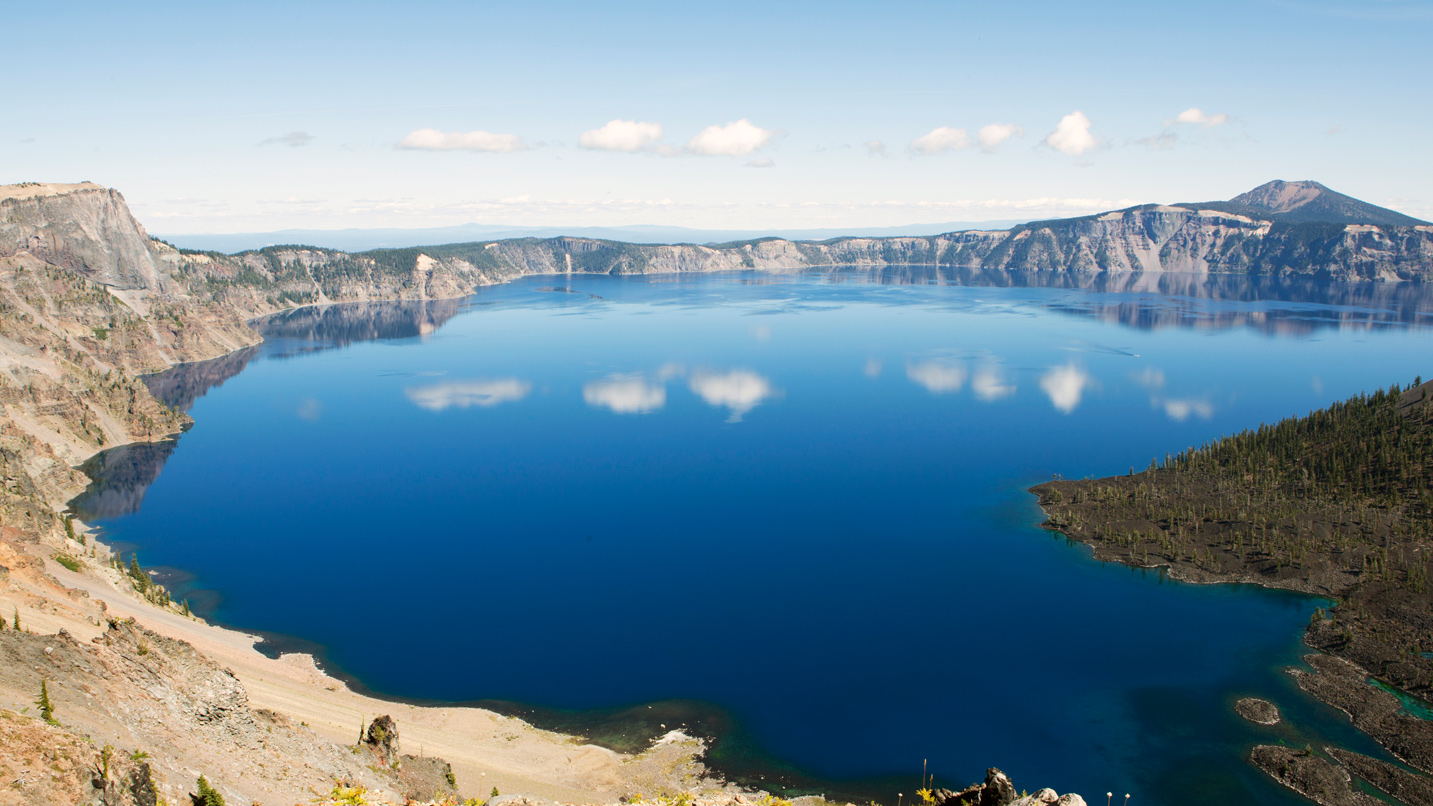
Volcanic forces have impacted the lives of Indigenous people in Oregon for thousands of years, and the High Desert Museum collaborated with Indigenous advisors in creating the exhibition. Visitors will learn about Klamath Tribes’ oral history passed down through generations about the eruption and collapse of Mt. Mazama. This violent eruption occurred about 7,700 years ago, just 90 miles southwest of Bend, when the mountain collapsed inward to form the caldera (a large depression or crater) that now holds Crater Lake. Today it remains a deeply spiritual place for the Klamath Tribes and a living reminder that volcanoes aren’t only a force of nature but a key part of the ongoing cultural story of Oregon.
Living with volcanoes is also a present-day reality. The exhibition looks at current scientific monitoring techniques to help understand volcanic behavior and how it might affect where people live and play. Hands-on displays reveal how scientists track subtle shifts, from underground seismic activity to the recent bulge on South Sister’s dome.
A Landscape Always on the Move
It’s easy to see the high desert as fixed and familiar, but as you move through the exhibition, you’ll start to see it’s always been in motion. A powerful force known as the Yellowstone hotspot once sat beneath Eastern Oregon, pushing up heat through the earth’s crust as tectonic plates drifted overhead. Over millions of years, lava flows, caves and craters have been forming across the state, shaping today’s landscape. The exhibition breaks big-picture geology into clear, engaging moments, especially for visitors who’ve never thought much about what’s happening beneath their feet.
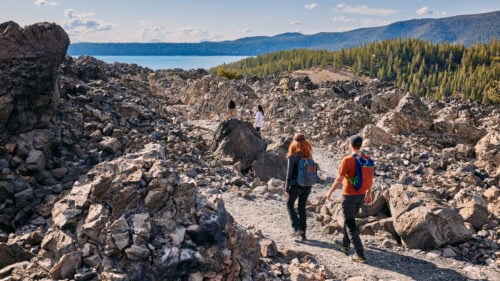
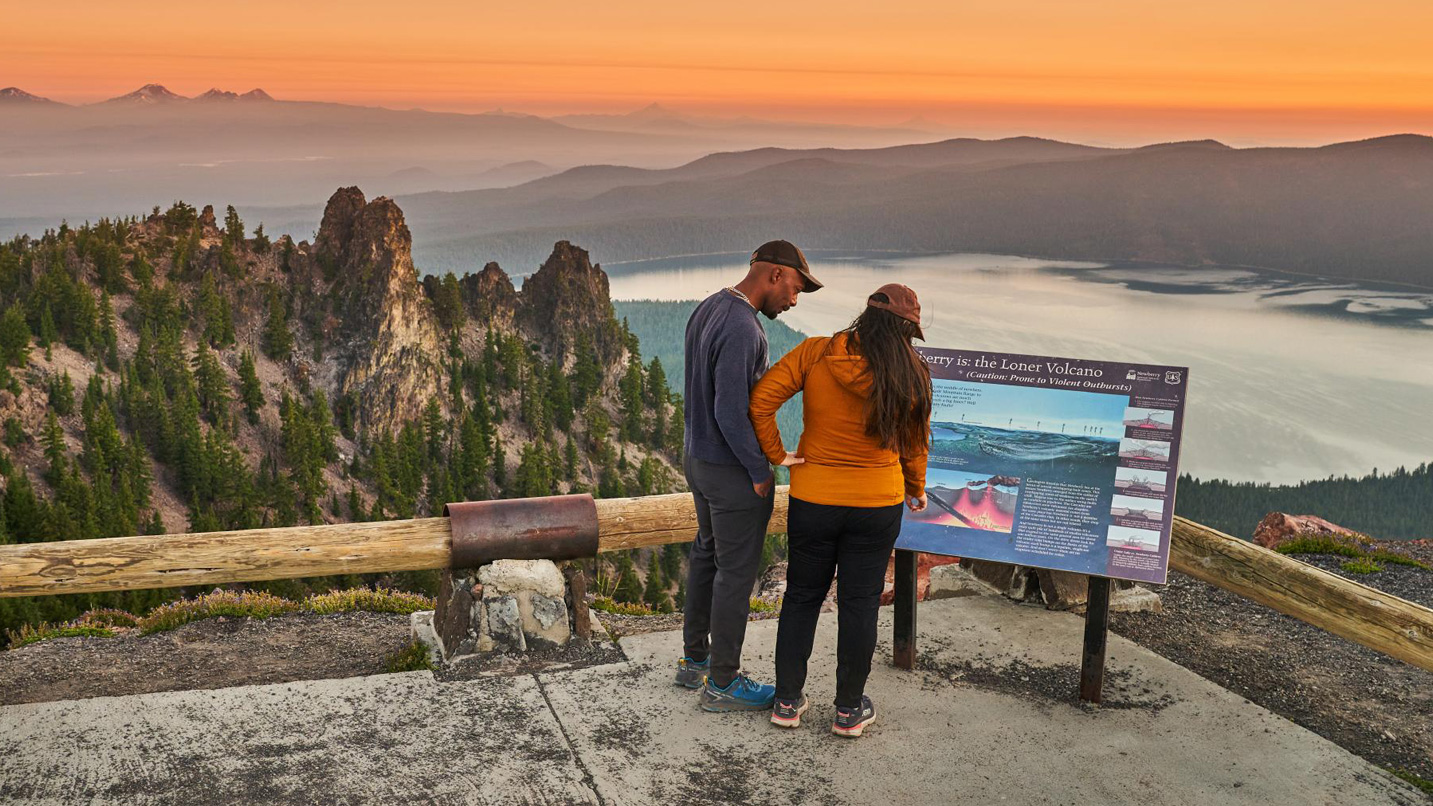
Today you can see those landscapes all around. Twenty miles southeast of Bend, Newberry Volcano doesn’t look like a classic volcano, but at nearly 1,200 square miles, it’s Oregon’s largest. Lava spread outward from the Newberry Volcano over a period of 600,000 years, creating a broad shield mountain that shaped so much of the Central Oregon landscape we see. Newberry National Volcanic Monument, a few miles south of the High Desert Museum, gives way to obsidian fields, lava flows, caves and the Newberry Caldera, the collapsed crater at the summit, which surrounds Paulina and East lakes. It’s an exciting reminder that some of the region’s most dramatic geology comes from a volcano hiding in plain sight.
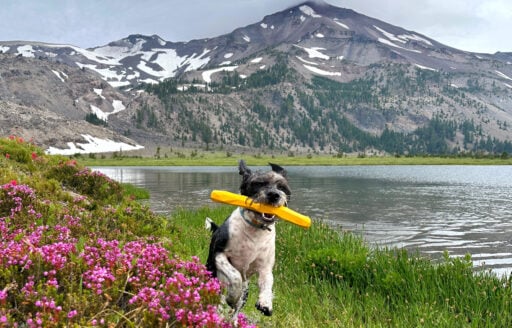
Rising in the Cascades about 20 miles southwest of Bend, the Three Sisters formed at different times over hundreds of thousands of years through a series of repeated eruptions that layered lava and ash. Mt. Bachelor formed later and is a relatively new kid on the block, geologically speaking. Just 15,000 years ago, lava flowed outward from a central vent, giving it the broad, gentler slopes we see today.
“Under Pressure” welcomes you to see the region with new eyes. After a day at the High Desert Museum, Mt. Bachelor and the surrounding terrain start to look a little different. Volcanoes aren’t just background scenery — they’re a living, changing part of Oregon’s landscape, and “Under Pressure: A Volcanic Exploration” offers a powerful way to see their stories unfold.