





Every summer a team of professional athletes gets its moment in the spotlight at the High Desert Museum near Bend and Sunriver. It’s an event they’ve been training for since the middle of winter, and a daily regimen of exercise, careful dieting and a trusting relationship with their trainer makes each show possible.
These aren’t members of the Portland Thorns or Timbers, however. These athletes are turkey vultures, owls, falcons and other birds of prey that participate in the museum’s Raptors of the Desert Sky program.
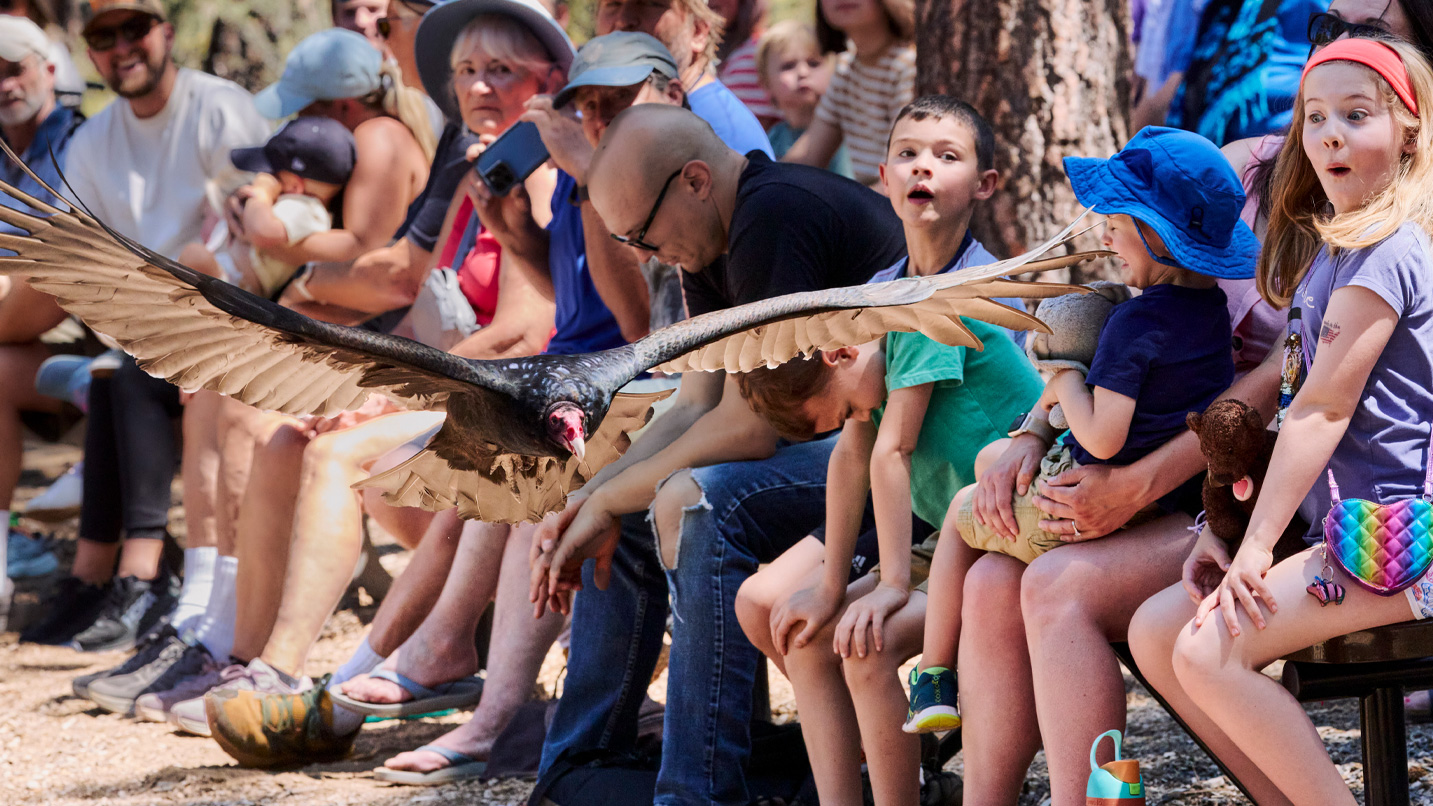
When visitors fill an amphitheater of wooden benches for the summer event — offered daily between Memorial Day and Labor Day weekends — they’re treated to some of Oregon’s largest predators soaring overhead and swooping by at ground level. The show, a museum mainstay for more than a decade, lasts about 30 exhilarating minutes and often looks effortless.
It’s all part of a busy season for the program’s “professional athletes,” as museum employees have taken to calling the birds, with a training camp that began three to six months earlier — sometimes with trainer interactions that lasted mere seconds per day.
Here’s a behind-the-scenes look at how the museum builds a special relationship between coach and player — and how it spends months preparing its MVPs for the beloved Raptors of the Desert Sky program.
Why Raptors Love to Perform
Dana Whitelaw, the museum’s executive director, says that Raptors of the Desert Sky is a core part of the museum’s mission to bring science, history and local culture to life. “Instead of having to read it on a wall, we’re going to put you in the forest and fly birds over your head so you really get that experience,” she says.
Jon Nelson, curator of wildlife at the museum, says that his team hopes to accomplish those goals in ways that are enjoyable for the birds and visitors alike. At any given time, up to 10 birds are candidates available for each day’s Raptors of the Desert Sky program, most of which are rescues or retired falconry birds.
None will be forced to train, and none are punished for taking time off to rest. “The birds are invited to participate and, if they don’t want to participate, there’s no penalty,” Nelson says. “It’s our job to make the show as engaging and fun for the birds as we possibly can so they want to participate.”
When the museum receives a new bird, the team evaluates each animal for its game-day readiness and willingness to train. If a bird doesn’t seem like a good fit, staff members find another role for them in the museum. Some sit on a trainer’s glove for presentations, and others are taken to schools and libraries for public events.
How Birds of Prey Are Trained by Experts
When a bird is deemed a good fit for Raptors of the Desert Sky, pre-season begins as early as mid-February.
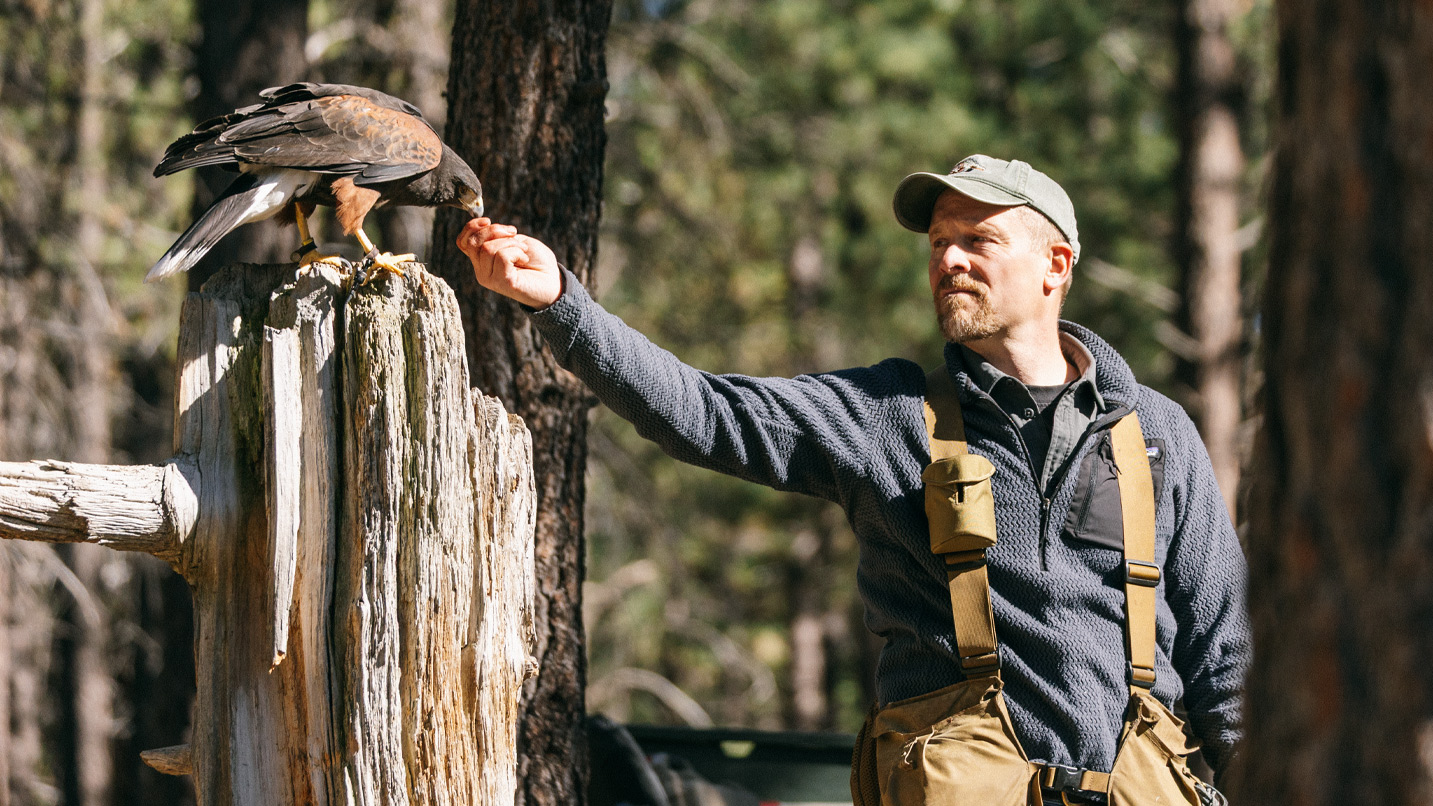
For a new bird, months of work begins with the smallest of gestures. Nelson says a trainer starts working with a new animal by entering its enclosure, dropping off food and immediately exiting. For days or weeks, that may be all a trainer does with a bird. “We’re trying to minimize its fear of us, so you might only be going in with that bird for a couple of seconds per day,” Nelson says.
Once an animal associates the trainer with food, it may grow comfortable eating with that person in the enclosure. From there, the next step is for the raptor to get on a glove so a trainer can weigh them, a routine that helps the team determine how much food a bird needs each day to remain active and excited to continue training. Gradually, birds are trained to enter and exit specially designed crates for transport around campus — and to fly from perch to perch in the museum’s indoor Birds of Prey Pavilion when unoccupied.
By this point, Nelson hopes a bird has gained confidence and developed a rapport with its trainer. If so, they head outside. Outdoor training begins with the bird attached to a safety line so it can’t fly off, which happens on occasion. When a trainer feels confident, they may remove the safety line and take birds for “walks” — where it follows their trainer along the museum’s outdoor paths while darting between branches of ponderosa pine trees. To prepare the birds to be comfortable in crowds, other staff members are occasionally invited to watch training in the amphitheater while closed to the public.
Nelson says the time to train a bird for the show varies among individual animals and species. Some are ready for prime time within their first year of arriving at the museum, but most take two or three years. Some birds are more or less active, depending on the day’s weather, while some species learn faster than others. A number may struggle to overcome past traumas. “Those individual personalities may vary from very cooperative and willing to work with people to ‘I hate people,'” he says. “You never know where on that spectrum an individual bird’s going to land.”
What to Expect at the Raptors of the Desert Sky Program
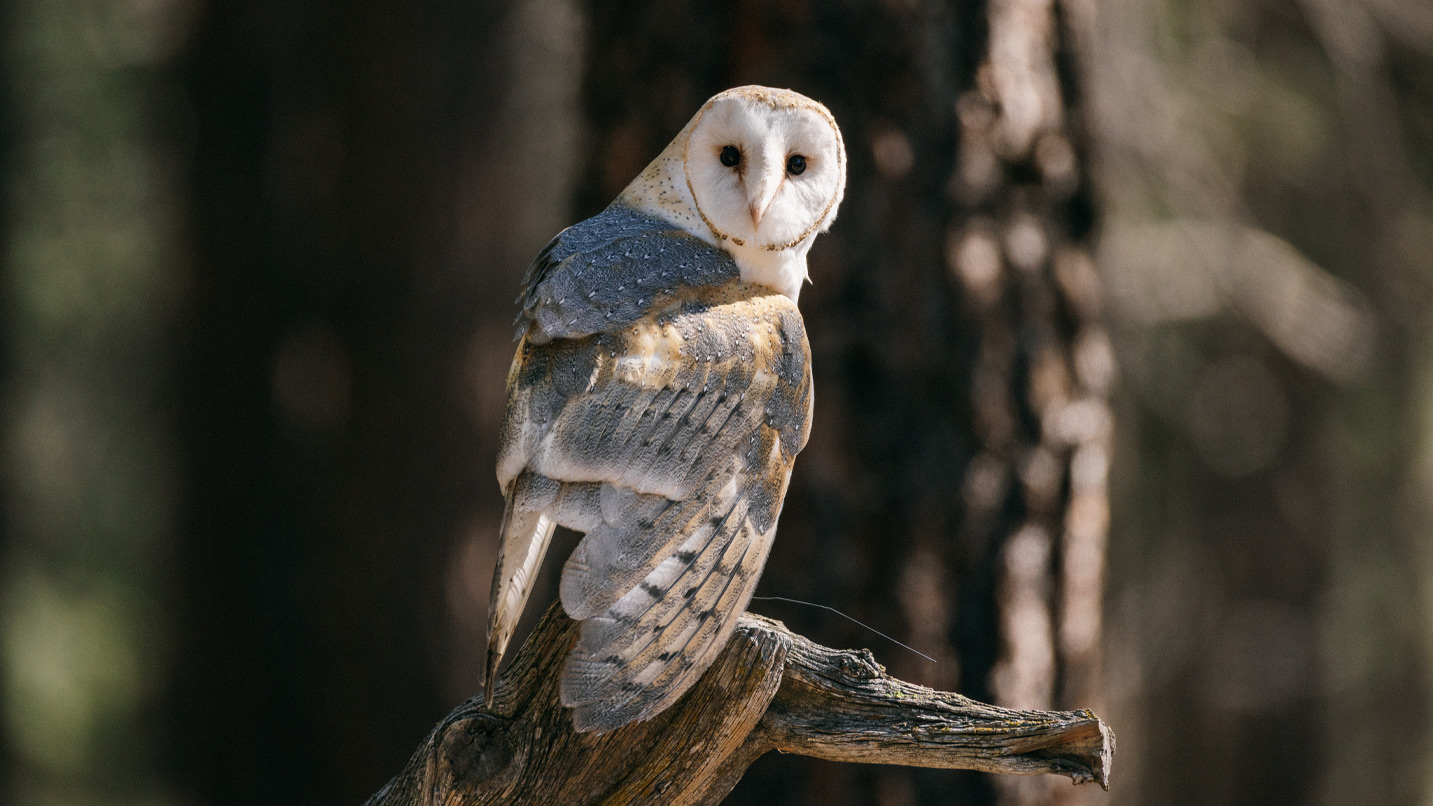
When a bird reacts well to those outdoor excursions and seems ready, it is called up to the Raptors of the Desert Sky program, where every day is the Super Bowl.
A few hours before each show, the day’s performers are loaded into specially designed crates and driven across campus. During the show, they’re taken out, one by one, while a staff member speaks about each bird’s habitats, wingspan and interesting behaviors for the gathered crowd.
While that happens, that bird flies between perches that ring the amphitheater, where a trainer waits with food at each stop. Sometimes, the birds fly between rows of benches. Other times, they soar just overhead, close enough to occasionally graze the heads of audience members.
Nelson says roughly the same roster of four to five birds gets called up each day, but some may be swapped out or added as the season continues. Most birds participate for several years, retiring only when age renders them unable to go through months-long training or the daily summertime routine.
No matter the birds an audience may see on a given day, Nelson hopes the takeaway is the same. “We want people to have an appreciation for these species and their role in our high-desert ecosystems,” he says. “That’s why we’re trying to show them in this really natural environment and get them close — so people can have that really impactful, up-close experience that encourages them to pay attention to wild birds when they’re out on the landscape.”
If You Go:
- Tickets for the 11 a.m. show are available only at the museum’s front desk and frequently sell out by 10 a.m. Arrive early to secure your seat.
- From the front desk, it’s about a 15-minute walk or stroll on wheelchair-accessible paths to the amphitheater.
- It’s required to attend a pre-show talk before heading to the amphitheater. There, a staff member provides tips for staying safe, having fun and creating a safe environment for the raptors.