

As I drove through the Chehalem Mountains in late winter, grape vines stood quiet and bare, their peaceful rows rolling across the hills like corduroy. Winemakers call this cellar season, that in-between time when the hard work of harvest becomes a memory but before the growing season begins in earnest.
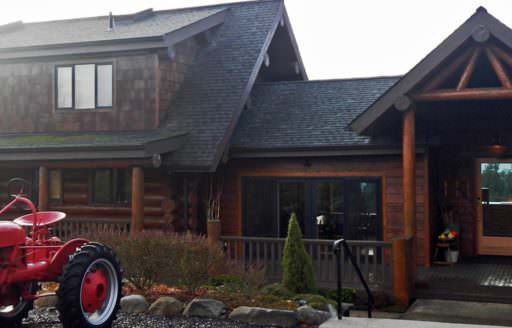
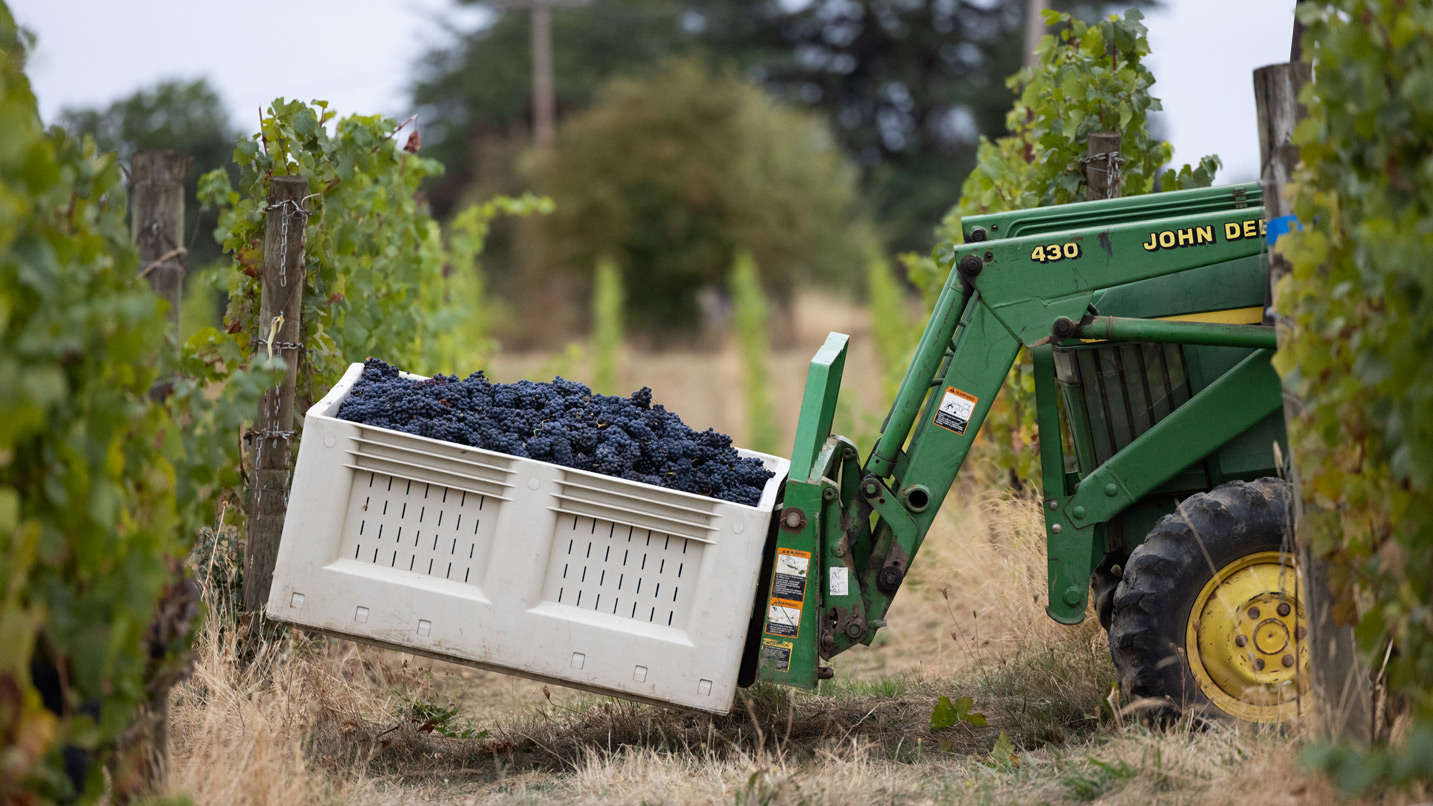
That doesn’t mean nothing’s happening in the vineyards. As I pulled into the driveway of Brick House Vineyards, a working farm and winery about 30 miles southwest of Portland, a tractor rumbled past piled high with prunings. It was a vivid illustration that, even in the quietest seasons, there’s always something going on at this family-owned, biodynamic vineyard.
A Historic Setting for Iconic Oregon Wines
Brick House feels wonderfully unforced, as if arriving at somebody’s home rather than a staged destination. In a sense, it’s true: Owners Doug Tunnell and Melissa Mills live onsite, in a big brick house not far from the lovingly restored 1930s barn that serves as the estate’s winery and tasting room.
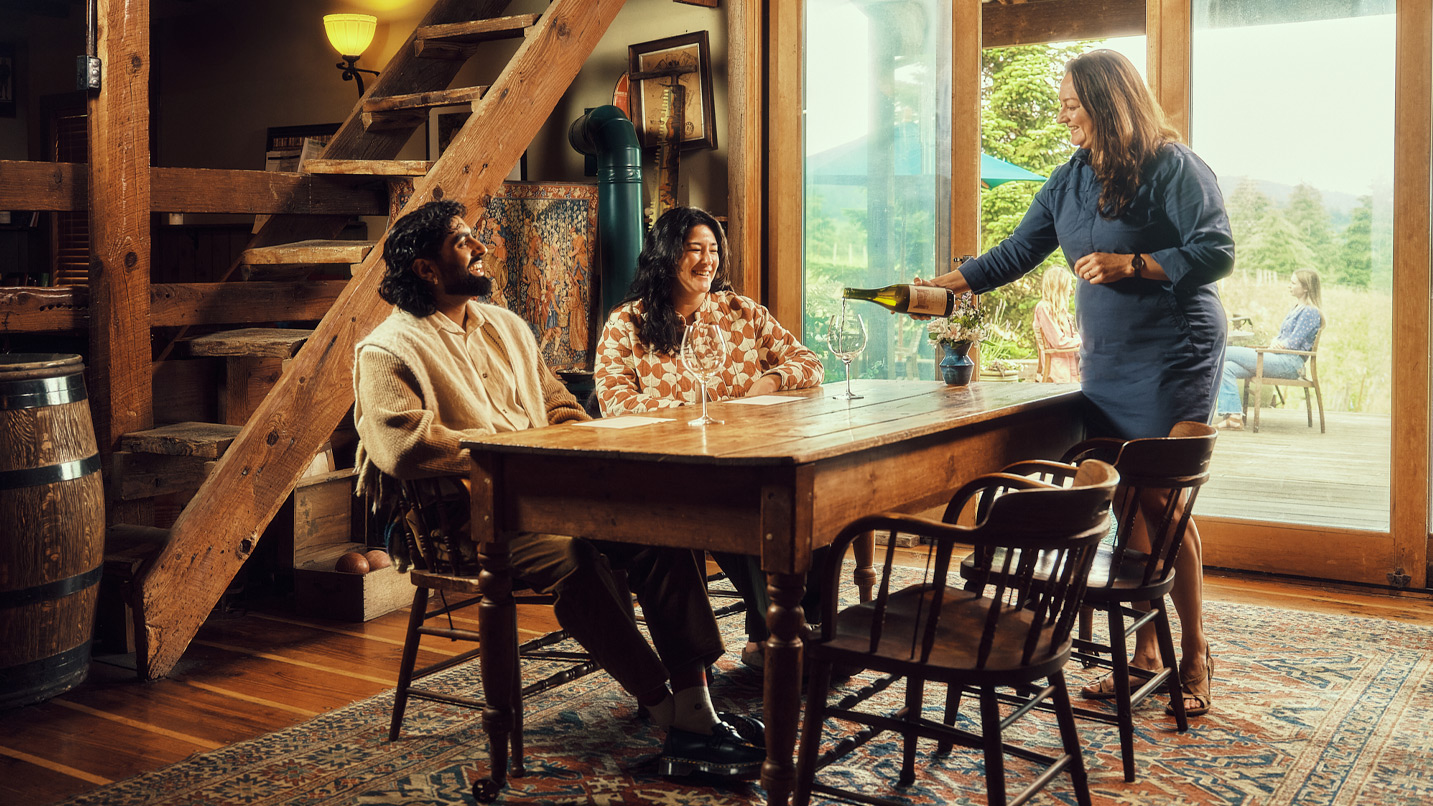
On the deck overlooking expansive vineyards of chardonnay, pinot noir and gamay, I met Casee Clark, director of hospitality and membership, who welcomed my friend and me with the kind of ease that immediately lowers your shoulders. Inside, we settled in at a long wooden table next to a crackling fire with glasses of bright, minerally chardonnay while Clark and Tunnell told us the story of the winery.
Brick House was founded in 1990. Tunnell came to wine as a second career after nearly two decades as a CBS foreign correspondent. Burned out on dangerous places and hard travel, he began looking for a different sort of life. One day Tunnell came across an article in the New York Times magazine about a French family planting pinot noir in the Dundee Hills.
“Dundee, I thought. That’s where I used to go to grandma’s house,” says Tunnell. Before long, he’d purchased a 40-acre former hazelnut and walnut orchard and began building Brick House into a fully estate winery. Today, everything Brick House makes begins and ends on this land, from farming the grapes to making the wine to welcoming visitors to taste it.
Unique Biodynamic Wines Made in Harmony with Nature
From the very beginning, Tunnell’s goal was to grow organic grapes. “It was a natural extension of living on the vineyard,” explains Tunnell. Today, all 30 acres of pinot noir, gamay and chardonnay on Brick House’s estate are Demeter-certified biodynamic, a rigorous system that treats the vineyard as a whole living system, with an emphasis on soil health and biodiversity.
That’s not just something tucked away behind the scenes. Visitors are invited to experience the landscape for themselves. “We like to encourage our guests, especially during the summer when there’s fruit on the vines, to go out there into the vineyard,” says Tunnell. “There’s nothing out there that will hurt you (like herbicides). You can really connect with Mother Nature, and that’s something that’s rare for a lot of people.”
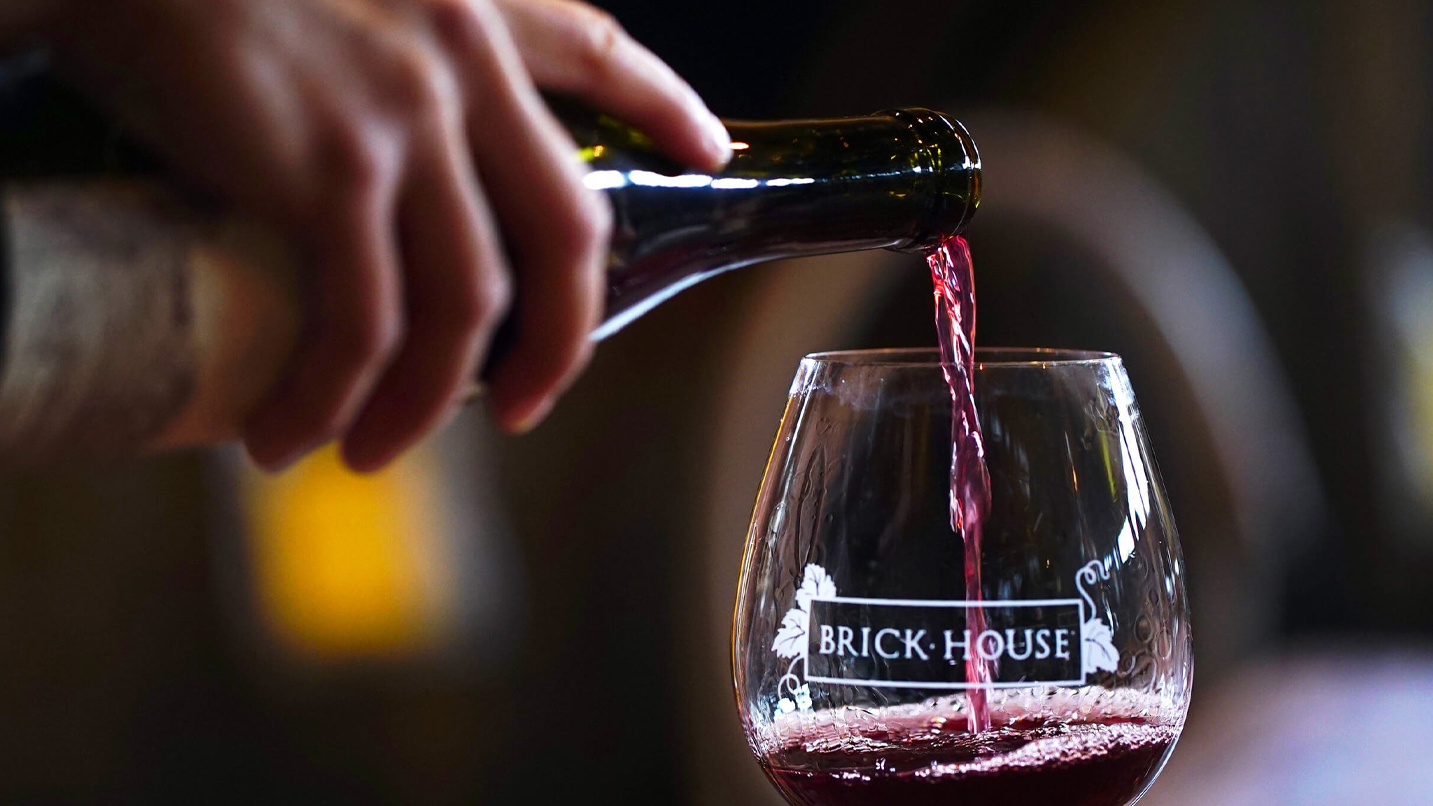
That ethos of working in harmony with nature extends to the cellar, where visitors can enjoy tastings among the barrels. Here, all of Brick House’s wines are fermented entirely with native yeast, which ensures the wines truly mirror the place where they are grown. “The yeasts are just as much a product of the vineyard as the grapes,” says winemaker Savannah Mills. “In that way, tasters truly taste the place they are visiting. They experience Brick House Vineyards as a living organism, which is a key principle of biodynamic farming.”
Indoor and Outdoor Tastings with Vineyard Views
The tasting experience at Brick House is also designed to feel connected to the vineyard. There are year-round indoor or outdoor options depending on the weather. If the deck is a little too exposed, a nearby three-sided “arbor house” makes a lovely, sheltered perch for slowing down with a glass and a view of the vines doing their work. Each flight includes at least five wines, often a mix of whites and reds, and sometimes a library pour pulled from past vintages. The lineup changes month to month, so you can return and have a completely different experience the next time.
During my visit, we tasted two chardonnays from different vintages, a gamay, and three pinot noirs from various vineyard blocks. Clark guided us through the nuances of each wine, with plenty of time for questions about everything from the rising popularity of gamay to the impact of barrel choice on texture and aroma. At some point, I realized we’d slipped into the kind of easy rhythm you usually only find around a friend’s table.
“That’s what we love about wine,” says Tunnell. “Each bottle is an opportunity for connection – with the landscape, the people who grow the grapes and make the wine, and people with whom we share wine.”