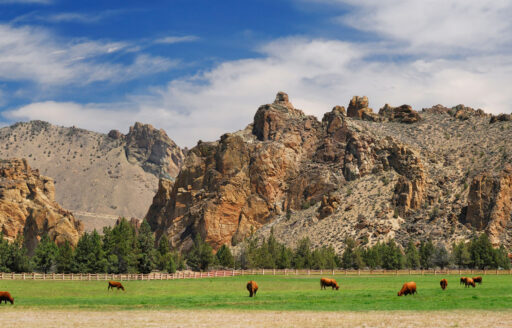
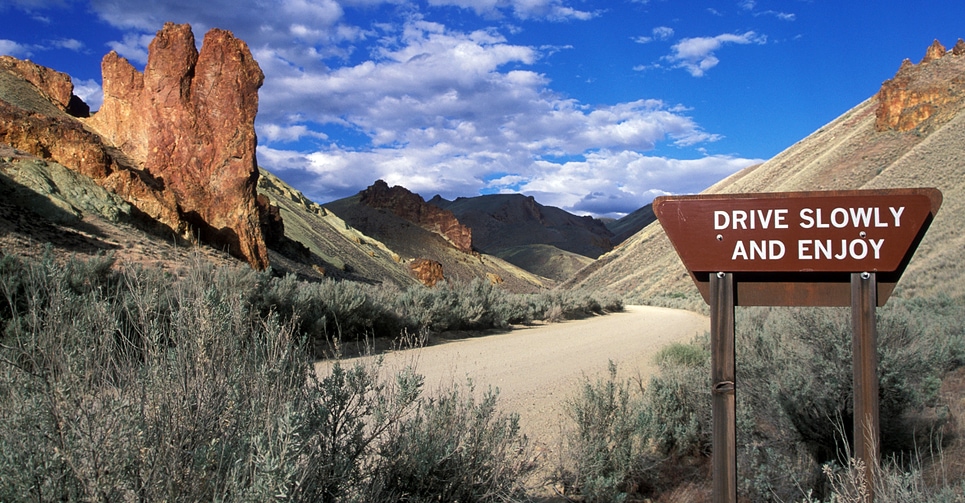
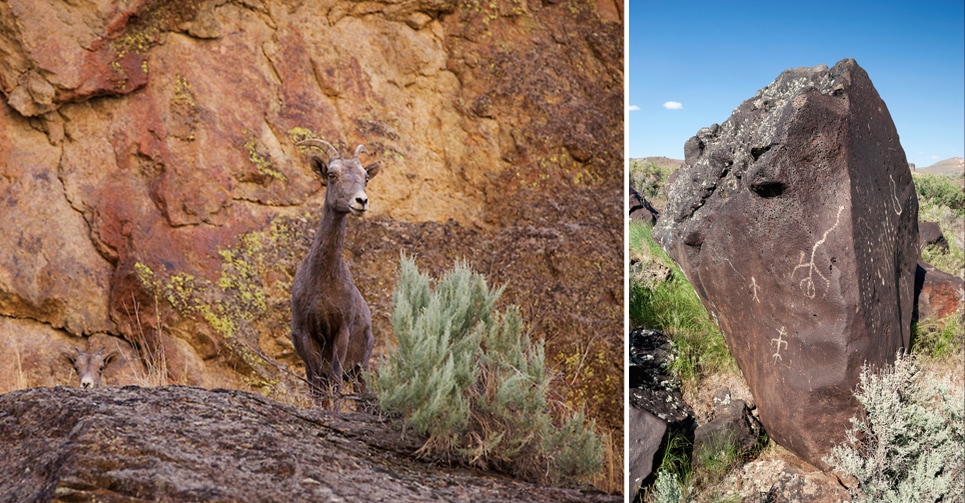
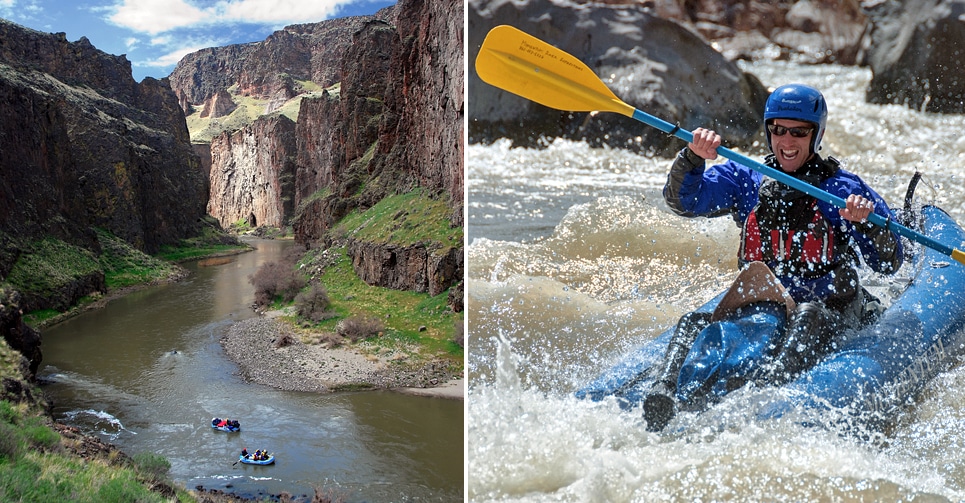
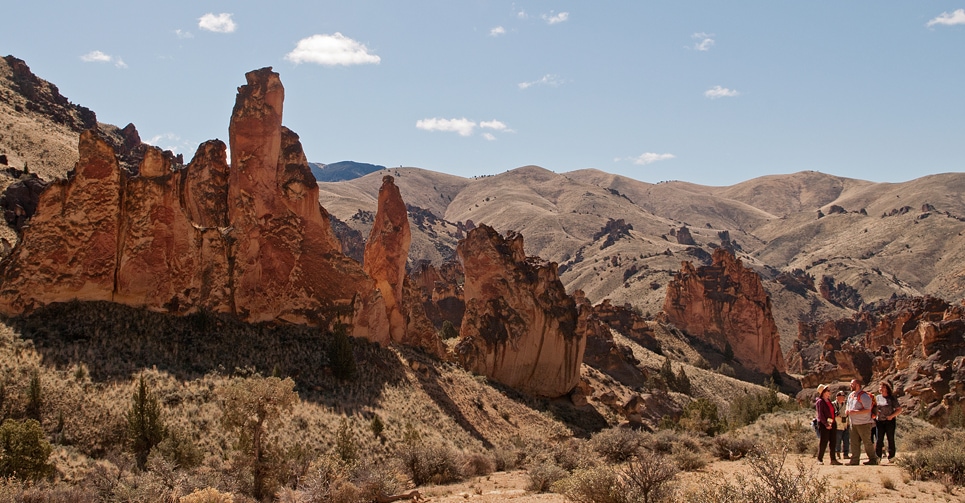
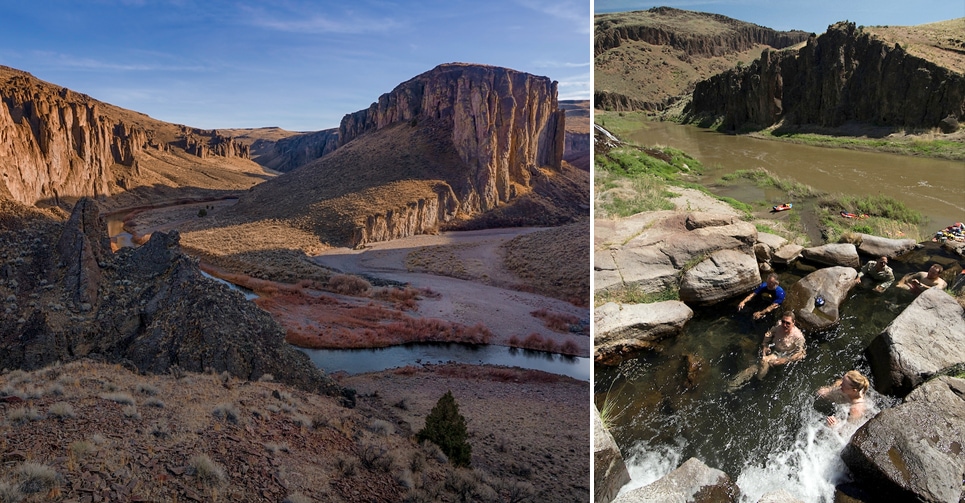
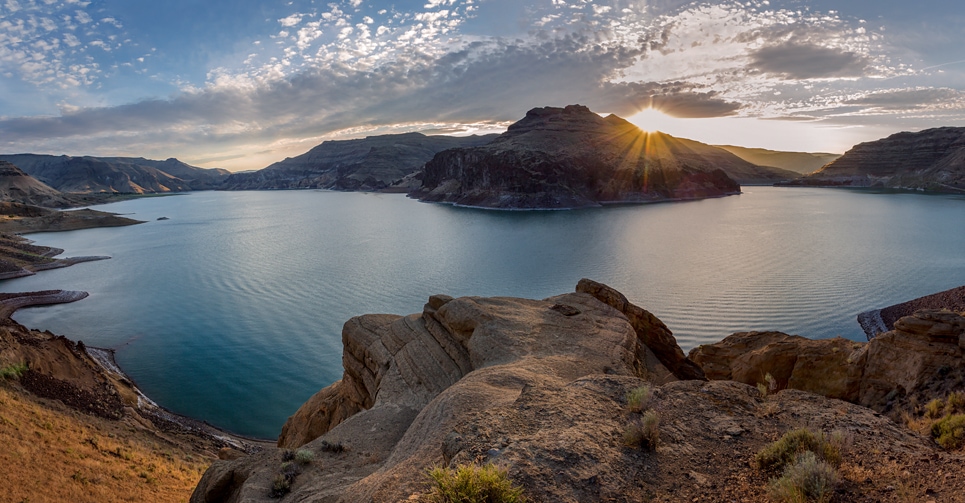
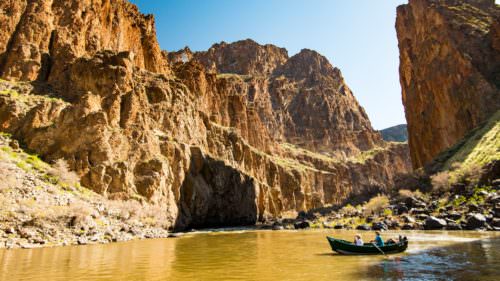
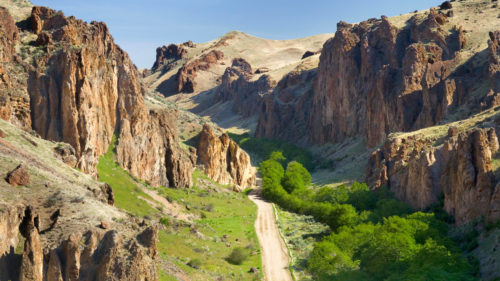
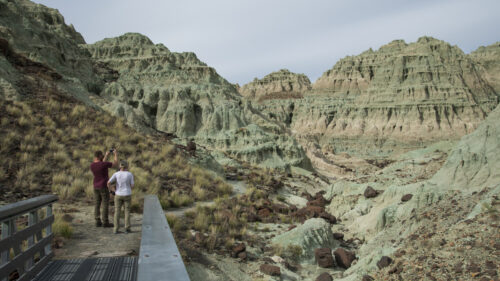
The Owyhee is vast, comprising more than 2 million acres of rolling hills threaded by rivers with wind and water carving canyons both sweeping and narrow. Geology varies throughout the park, from fresh lava flows at Jordan Craters to basalt cliffs soaring above the West Little Owyhee River. Leslie Gulch’s red pinnacles are weathered from volcanic rock deposited here 16 million years ago by the hotspot that today fuels the geysers of Yellowstone National Park. (Photo by Leon Werdinger.)For daytrippers, decent dirt roads — a rarity in this area — make places like Leslie Gulch and Succor Creek State Natural Area splendid places to sample the Owyhee. Yet it’s worth noting that even the most gentle Owyhee visit requires preparation: Aside from Lake Owyhee State Park, there is no potable water or cell service, let alone a 7-Eleven. For those seeking deeper adventure, the opportunities are endless. (Photo by Greg Vaughn.)On land, there’s plenty of hiking, camping and hunting. More than 500 archaeological sites — many of them with carvings made thousands of years ago by Native Americans — pepper the landscape, and birders and wildlife watchers delight in diversity deep within the desert. (Photos by Ben Chase and Leon Werdinger.)When the Owyhee River is high, rapids with names like Widowmaker thrill river runners. During lower flows, canoes in Lake Owyhee and packrafts or inflatable kayaks in other rivers make for fun water navigation. And fish abound in the entire system, from famous brown trout angling below the Owyhee Dam to native redbands in the tributaries. (Photos by Leon Werdinger.)Lace up and take a stunning hike in Oregon’s red-rock country — and you can even take the kids on a number of these rocky treks. If you’re hiking near Leslie Gulch cliffs, crane your neck in an attempt to spot California bighorn sheep, part of the largest herd in the nation. The sheep are often elusive, but you’ll feel no disappointment as you wander up Juniper Gulch, one of a number of hikes from Leslie Gulch into slot-canyon-style terrain. Hikers weave nearly a mile around gold-and-red rock curves punctuated by green brush to emerge at last in an airy, natural amphitheater. (Photo by Gregg Mizuta.)Descending into Three Forks — a tricky last stretch requiring a four-wheel-drive vehicle — you might gasp at how water has created something so magical. Cliffs and greenery hug the cool water meandering through. Scrambling up the Middle Fork of the Owyhee teases how the walls narrow and widen again continuously farther upstream. And a short amble away is the evening treat: a dip in hot pools perched above the main river. The Three Forks Hot Springs are on private land, but the owner has long allowed people to visit — a privilege you must respect by making sure to leave the spot as you found it. (Photos by Mark W. Lisk and Chad Case/Idaho Stock Images.)Easing in at sunset at Lake Owyhee, you’ll likely muse on how just one enchanting day in the Owyhee Canyonlands isn’t enough, and you’ll inevitably start planning a return trip to explore some unexpected beauty in the untamed wilderness. (Photo by Mark W. Lisk.)
Advertisements
In Southeastern Oregon, far from the state’s signature moss-dripped forests, lies one of the most remote stretches of the American West.
Only three paved roads cut across the Owyhee Canyonlands, a region of undulant sagebrush hills, rivers and canyons that is larger than Yellowstone National Park. Here, solitude abounds — meaning visitors experience a refreshing lack of cell phone service and some of the most light-pollution-free skies left in the Lower 48.
You’ll find much to explore in the untamed expanse. On the northern end, places like the Honeycombs, Chalk Basin and Leslie Gulch are filled with red-rock spires and marbled hills remnants of volcanic activity from when the Yellowstone hot spot burbled beneath Oregon 16 million years ago. In the south, rivers meander across the landscape, carving both gaping canyons on the Owyhee River and tight cracks in the earth along the Owyhee’s Middle Fork.
The result is a desert wonderland with a wealth of recreational offerings. Rafters deem the rapids of the Owyhee Wild and Scenic River a paddler’s paradise, and the canyon walls here are so immense that the New York Times even proclaimed this “Oregon’s Grand Canyon.” Hikers hit the winding trails to experience unmatched solitude and startling beauty. Plus, serene camping spots, bubbling hot springs, waterside petroglyphs and wildlife-watching opportunities abound, making the Owyhee Canyonlands an unmatched destination for all kinds of adventure seekers.
It’s a warm morning as we prepare the rafts and drift boats for our four-day journey through the Lower Owyhee Canyonlands. Individuals, families and outfitters alike have come here to run the 67-mile stretch of... More
Notable for their multihued mineral streaks, Eastern Oregon’s Painted Hills are, without a doubt, the most famous site at the John Day Fossil Beds National Monument. Yet there’s another colorful geological formation in these fossil... More