


Imagine it’s a spring morning on the Oregon Coast. A cool mist trickles in off the Pacific Ocean, and the only sound you hear over the waves is the occasional laugh-like cry of a gull. Just ahead, dozens of branchless tree trunks rise from the surf like sentinels from another era.
This spooky natural feature is the Neskowin Ghost Forest, whose trees date back millennia and recall a time when this stretch of sandy shoreline was a thick spruce forest. The long-buried trees only occasionally make their presence known in a small community near Lincoln City and just south of picturesque Proposal Rock, a hulking landmass that sits just offshore. Here’s how to see the forest and what to know for a safe and enjoyable experience.
How the Ghost Forest Was Made
Long ago, a majestic forest of Sitka spruce grew up to 200 feet tall just inland from the Pacific Ocean and near the modern-day community of Neskowin. No one exactly knows what happened next, but there are two main theories of how the forest died and was preserved in the sand. Many believe that a major earthquake and the tsunamis that followed in 1700 buried the trees in sand, preserving them. A recent theory, however, compellingly argues that it was more gradual — the trees were buried over many decades about 2,000 years ago, according to carbon dating. Geologists supporting this theory say that sand dunes slowly rose along the coastline, burying the forest but leaving the dead trees remarkably well-preserved. They continue to rise today.
Regardless of how it was buried, the forest largely remained under sand until the winter of 1997-98, when a series of storms swept away the sands that once covered the trees. After sleeping silently under the sand for generations, the forest finally resurfaced.
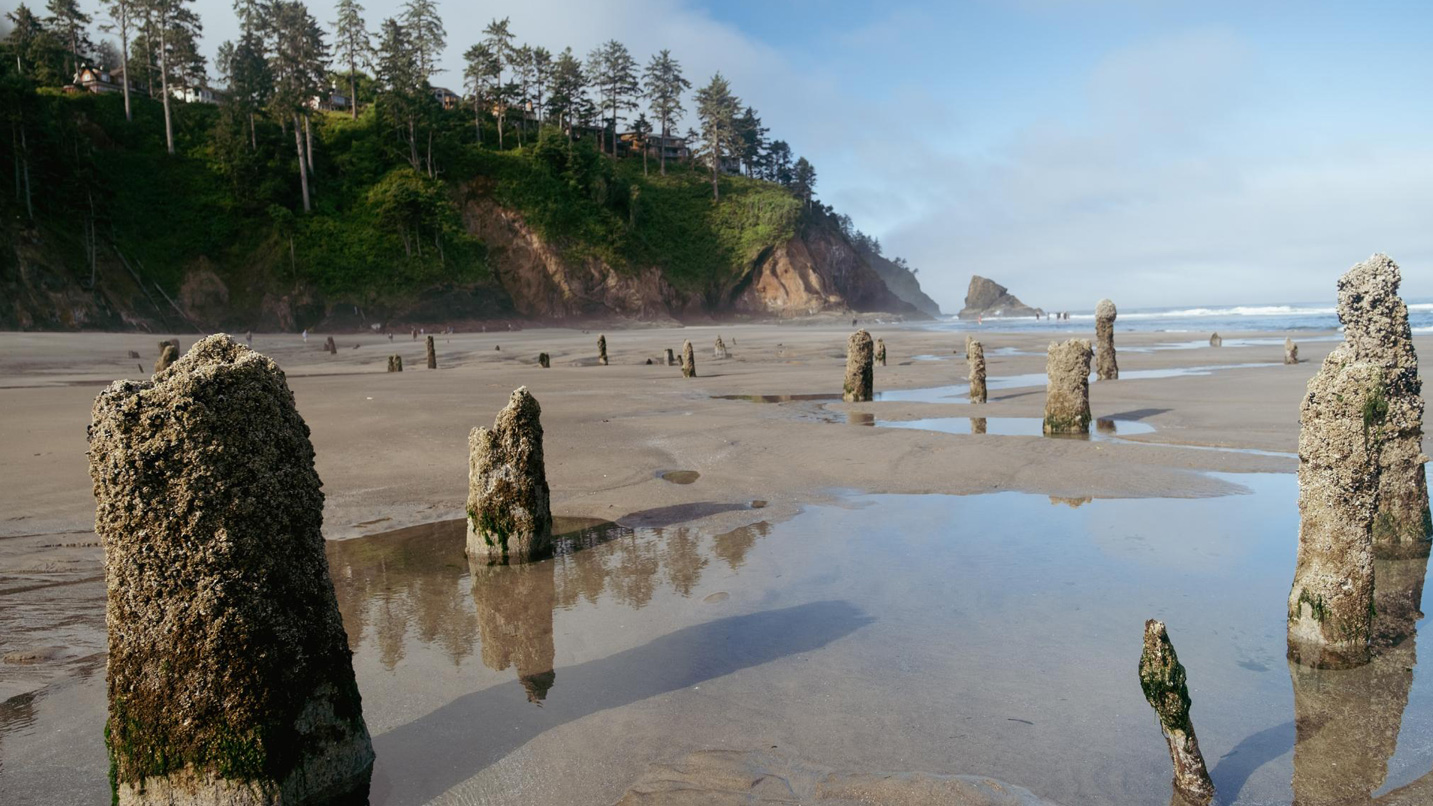
Today the forest is one of dozens of ghost forests on the Oregon Coast and, given the sheer volume of visible snags, perhaps the most dramatic. In all, roughly 100 snags — as the dead tree remains are called when they die without being cut into stumps — are visible during prime viewing conditions. Most are covered in barnacles and mussels.
How and When to See the Ghostly Snags
It takes a little planning to see the forest, still mostly buried in the surf, in all its spooky glory at Neskowin Beach State Recreation Site.
At least portions of the forest are visible at low tide throughout the year, but different seasons impact how much of the forest you might see on any given visit.
More sand accumulates on the beach in summer, for instance, so you’re more apt to see a smattering of ankle-high snags, rather than taller trunks. Look closely — the eroded tops of the wood occasionally pool with water, becoming makeshift tide pools and temporarily housing small crabs and other sea life.
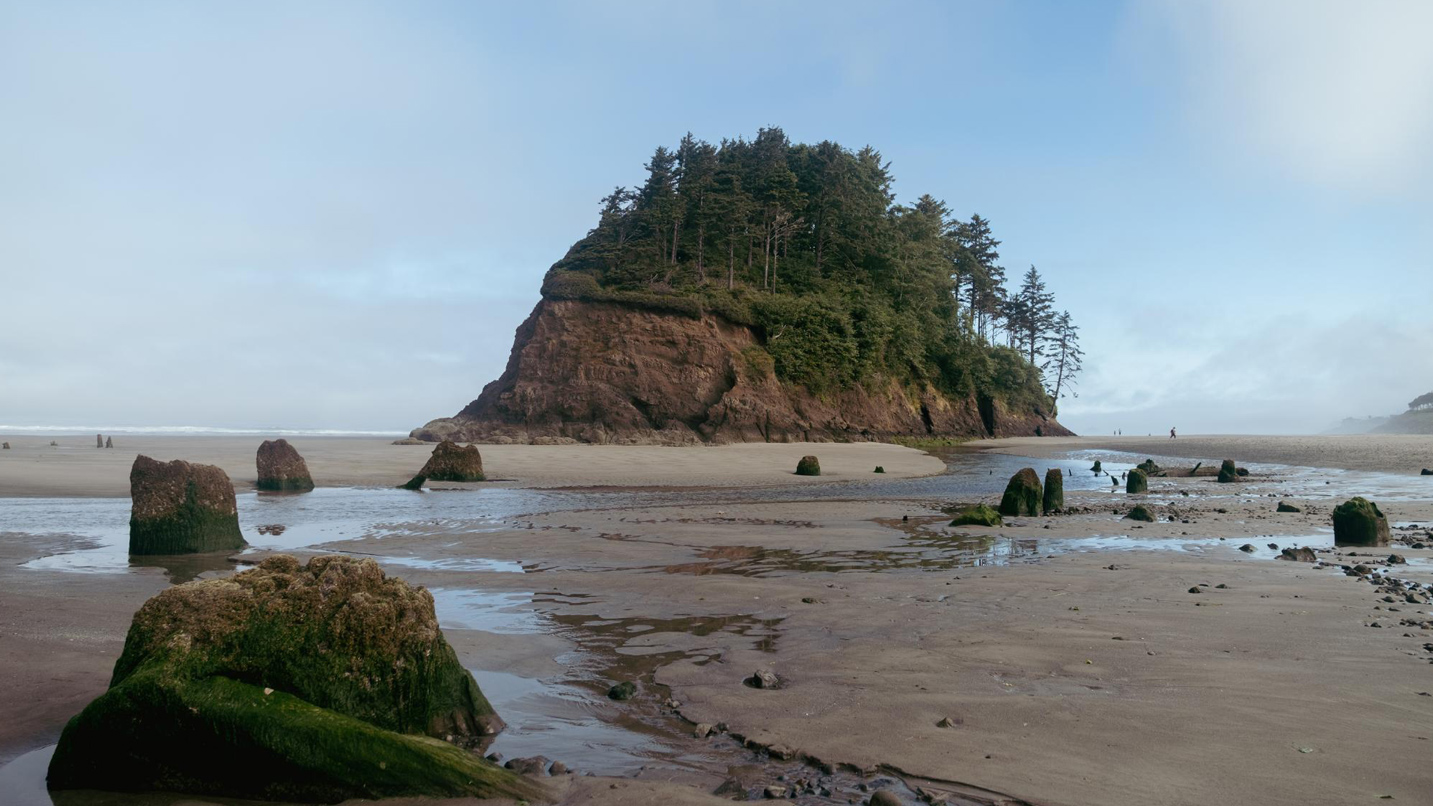
The full sweep of the ghost forest, where knee- or waist-high tree trunks emerge from the surf and are more visible, reaches its dramatic peak during very low tides in winter and spring — especially after winter storms. Check a tide table before visiting to see as much of the forest as possible.
From the Neskowin Beach State Recreation Site parking area, reach the forest by heading south along the adjacent beach for about a half-mile. Note that the walk requires crossing Neskowin Creek, which drains into the Pacific Ocean. The slow-moving creek is typically passable, even at high tide, and is rarely more than ankle deep.
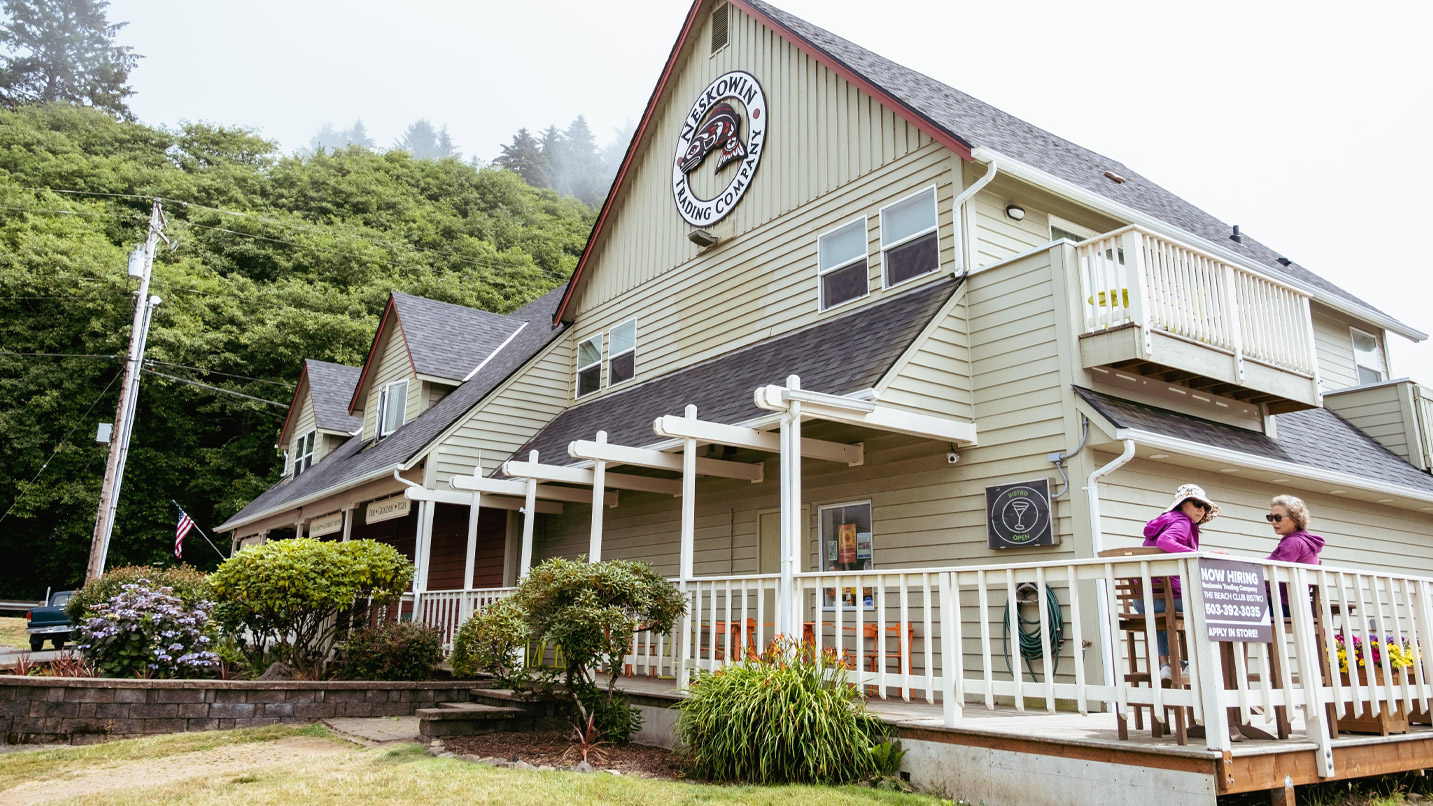
Stay, Eat and Play in Neskowin, Lincoln City and Pacific City
A visit to the forest makes a great jumping-off point for a fun-filled trip to nearby towns like Lincoln City and Pacific City, as well as within Neskowin itself.
For a hearty meal, try the wood-fired pizza on a covered patio alongside the namesake waterway at Hawk Creek Cafe in Neskowin. Next door order breakfast burritos, mini doughnuts, hearty deli sandwiches and grab-and-go fare from Neskowin Provisions — all ideal for a beach picnic among the snags.
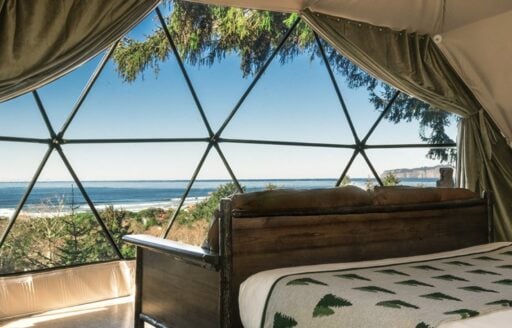
Several overnight stays sit within a short drive. For a budget-minded stay in Pacific City, enjoy secure bike storage and loaner vinyl for your in-room record player at the Surf and Sand Inn, which occupies a World War II-era U.S. Coast Guard station. To the south, relax around the communal fire pit and watch the tides come into Siletz Bay from the pet-friendly Looking Glass Inn in Lincoln City.
If You Go:
As with any activity on the Oregon Coast, you’ll have a safer, more fun experience by keeping a few tips in mind:
- Practice Leave No Trace principles to preserve the forest and other coastal ecosystems.
- Dress in layers to stay warm and protect against changing weather.
- Protect against sneaker waves and rip currents, watch for rising tides, and never turn your back on the ocean.
- Read additional tips for safely visiting the Oregon Coast.