
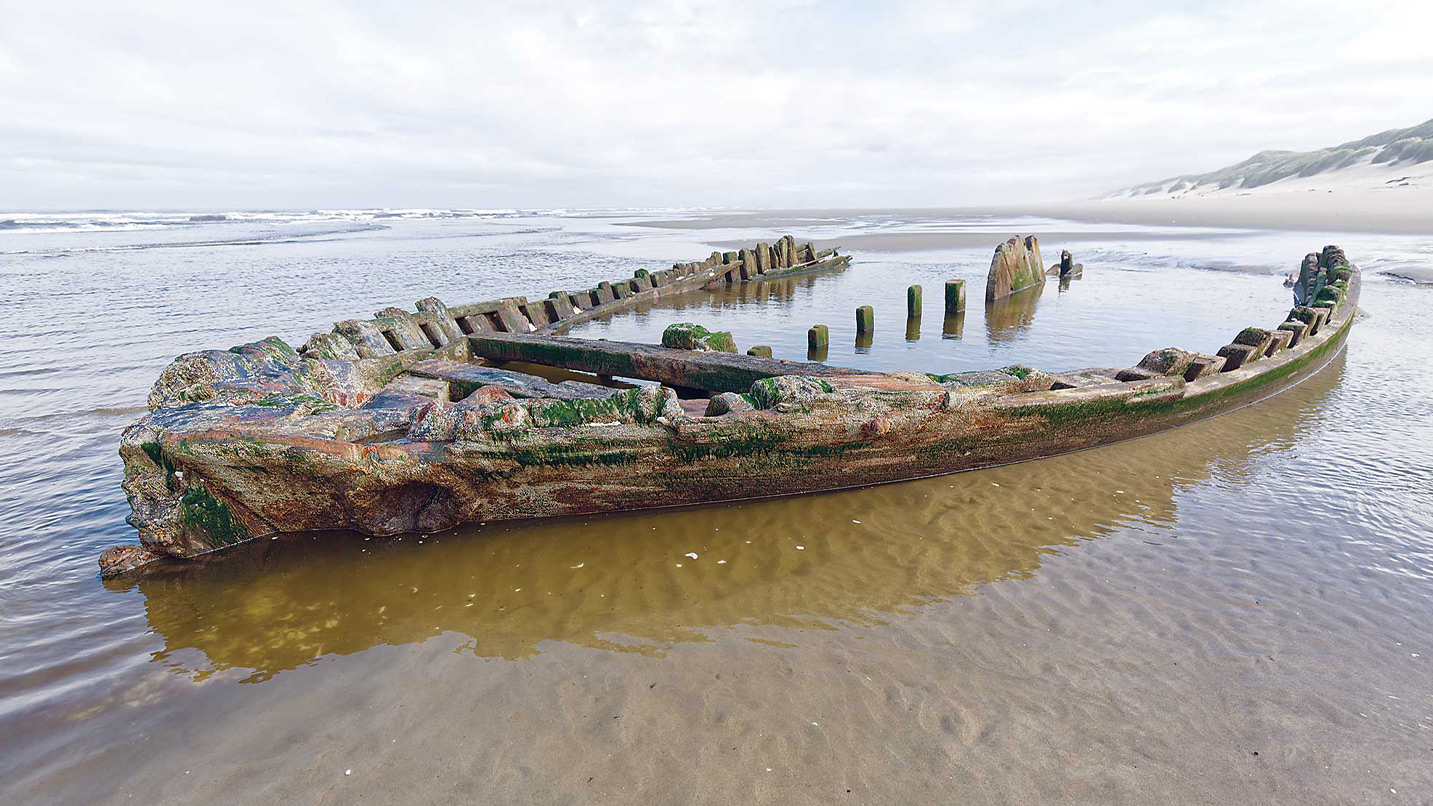
It was early and the sun hid behind a bank of fog as it rose, casting a soft morning light. It was early enough that instead of human prints, all we saw were wildlife tracks on the sandy dunes that separated us from our destination, Fort Stevens State Park’s beach. We were headed for a shipwreck — the storied remains of a four-masted steel ship that ran aground in 1906 called the Peter Iredale.
It’s hard to believe that it was still there, its rusted skeleton rising from the sand and washed by waves. As they played and posed around remains of the ship’s 275-foot steel hull — brought into higher visibility with the low tide and sand pulled away by winter tides — the kids indulged their imaginations with what the ship must have been like. I captured photos of their escapades.
What’s amazing is that winter provides all kinds of great experiences during its low tides. From parts of boats usually underwater to deeper tide-pool creatures like sea slugs and octopuses, the low tides of winter uncover many unique discoveries that are hidden or inaccessible at other times of year. Here are some great places to go and how to safely enjoy winter Coast adventures with your family — the hunt is on.
Wherever you go, be sure to follow these excellent tips and resources on how to “Coast Like a Local.”
Uncover Oregon’s History of Shipwrecks
The Peter Iredale — though perhaps the most famous since you can see it all year round — isn’t the only shipwreck on the Oregon Coast. Thousands of ships have been lost to such calamity. When tides are at their lowest, especially following a winter storm, you may find a few uncovered.
For a more challenging hunt, visit one of several other shipwrecks only visible at the lowest of tides. Just south of Depoe Bay is Boiler Bay State Scenic Viewpoint, where the shipboiler of the 1910 wreck of the J. Marhoffer lies between barnacle-uncrusted rocks. In Rockaway Beach, what remains of the 1908 shipwreck of the Emily G. Reed can be found. Appearing only as a boardwalk of parallel ribs, the shipwreck makes an appearance every few years.
About 6 miles south of the Siuslaw River near Florence, you can see bones of the wooden schooner Bella, which ran aground in 1906, only a few days a year. On the South Coast, near North Bend on Horsfall Beach, remains of the steel hull of the 1929 wreck of the Sujameco — the second-largest visible shipwreck in Oregon — reside. Salvaged for parts, only the lower part of the Sujameco’s hull remains, but it makes a dramatic reappearance in winter, usually following a storm.
Want more shipwrecks? The Columbia River Maritime Museum in Astoria has a large exhibit devoted to shipwrecks where you can learn about the causes, impacts and science behind them. Artifacts from both the Peter Iredale and the Sujameco are displayed here. In Florence check out the smaller Siuslaw Pioneer Museum to learn more about the area’s culture, including the wreck of the Bella.
Search for Colorful Rocks and Fossils on Rocky Shores
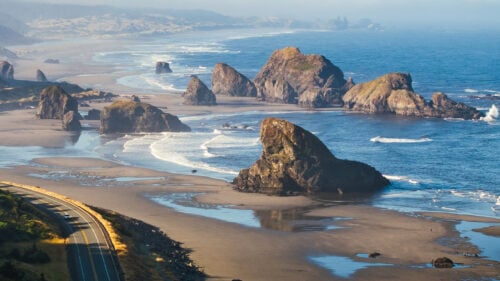
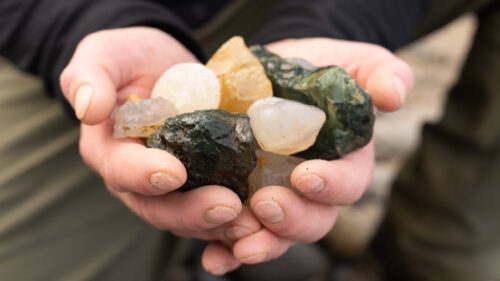
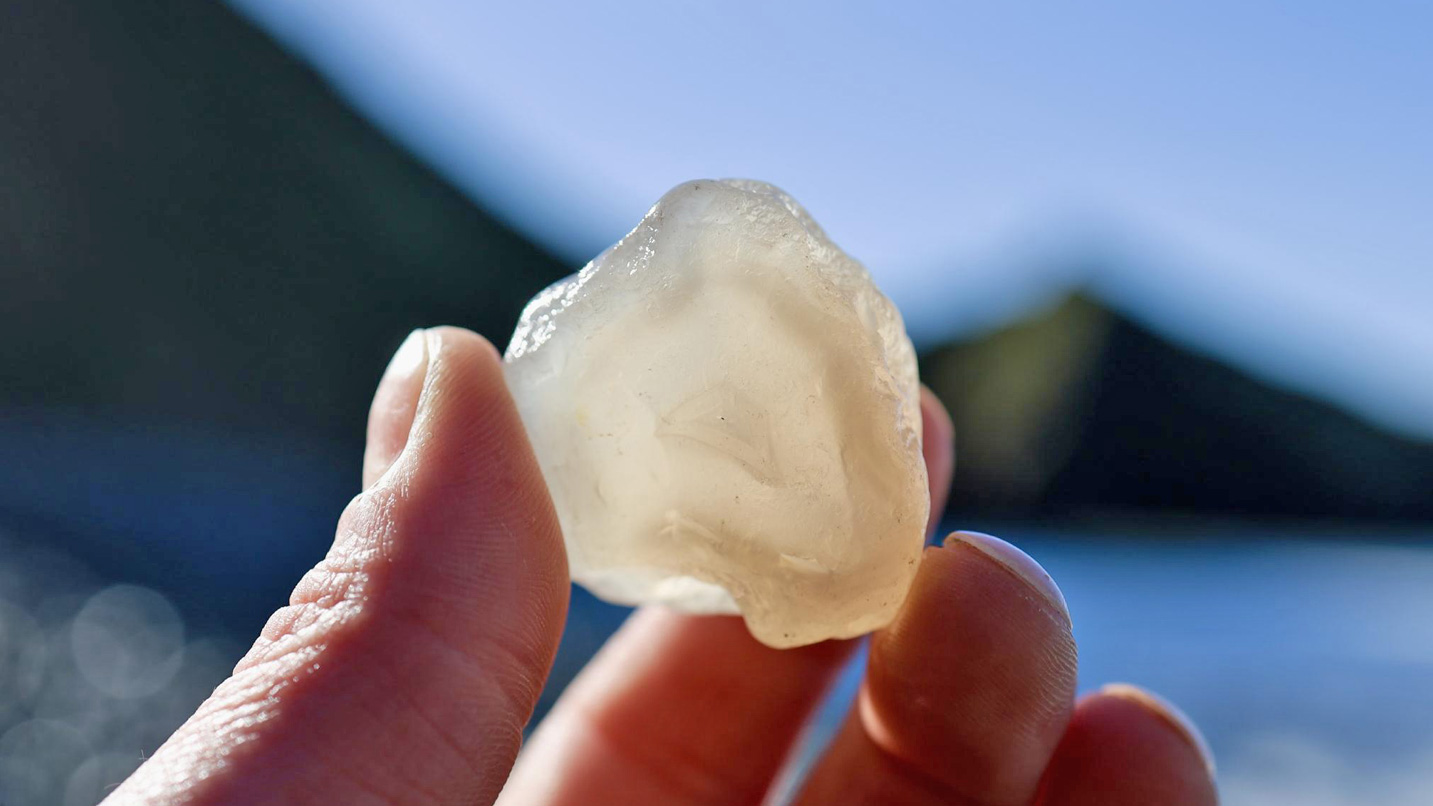
On Oregon’s rocky shores, geological and paleontological treasures await discovery. Polished by winter wave action and uncovered by retreating tides, various rocks and minerals are unveiled in a multitude of shapes and sizes, especially following a storm or king tide. Look for translucent agates or gorgeous red jaspers hidden in gravel beds when these long stretches of rock emerge from the sand due to wind and wave action.
On the North Coast, Short and Tunnel beaches near Oceanside are a great choice for agates, jaspers and zeolites — speckled basalt rocks with mineral-filled cavities.
On the Central Coast, Lincoln City beaches, including Nelscott and Taft, offer consistent sources of agate, jasper, petrified wood and fossils. Local experts at Rock Your World Gems in town offer occasional guided trips, interactive maps and other helpful resources. Kids love finding human-made treasures as well. The volunteers with the Finders Keepers program in Lincoln City hide handmade glass floats on area beaches for lucky visitors to find. If you’re not able to beachcomb due to physical disabilities, visit the Welcome Center and you’ll be able to enter a monthly drawing for a float.
For further fun, keep an eye out for fossils on your next beach trip. Look for fossil clams embedded in a stone matrix or chunks of petrified wood, for example. The stretch of beach from Ona Beach to Seal Rock is a personal favorite for marine fossils, while Neptune State Scenic Viewpoint — a set of four wayside locations — is especially fun for agate hunting.
Rocky beaches from Bandon to Brookings on the South Coast also provide a variety of geological material, from agates and colorful rocks that wash down from the hills to cool driftwood formations and large tangles of sea kelp washed to shore in winter storms. Notice the black sand on Gold Beach? It’s filled with tiny, sparkly minerals including real gold. Kids likely won’t find a nugget, but tell them to keep their eyes peeled just in case.
Find Marine Life Hidden in Tide Pools
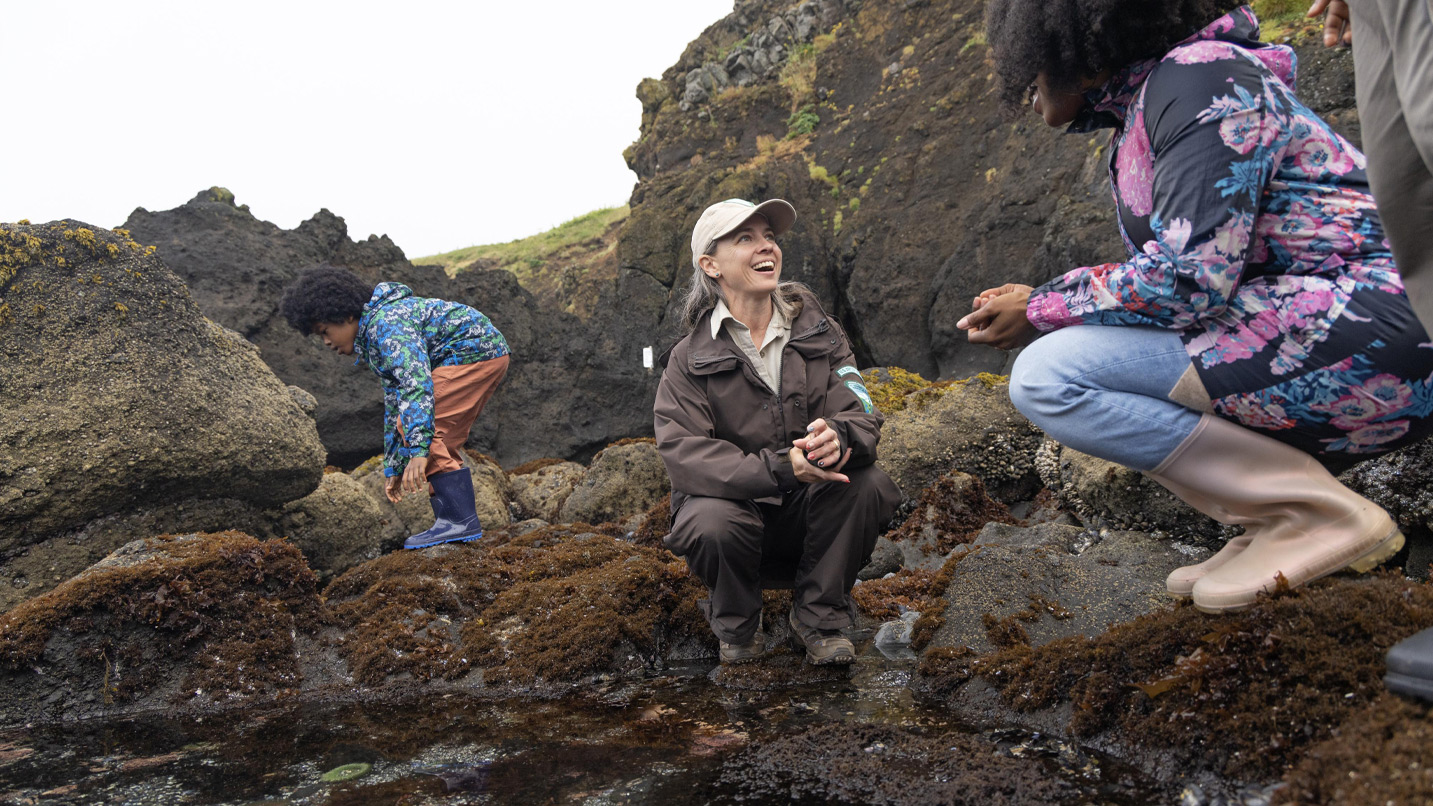
Seaweed, tentacles and shells, oh my! When tides dip to their lowest in winter, the rocky tide pools that remain engulfed by seawater much of the year are exposed. Many creatures can be spotted in these pools, including sun stars, giant green anemones, crabs, sea cucumbers, nudibranchs (sea slugs), octopuses and red sea urchins.
Cannon Beach’s iconic Haystack Rock is one of the best tide-pool locations on the North Coast, especially for young kids. Besides being easily accessible, interpreters from the Haystack Rock Awareness Program are available part of the year to educate visitors during low tide about what to see on and near this giant sea stack. Look for bright-yellow sea lemon nudibranchs, giant green anemones and the occasional giant Pacific octopus.
About 4 miles north of Newport, you’ll find the accessible tide pools of Yaquina Head Outstanding Natural Area at Cobble Beach. Carefully walk over the rounded basalt stones to pools teeming with life. You might even see some harbor seals lounging on the rocks.
On the South Coast, a little over a mile from Brookings, Harris Beach State Park is home to a variety of intertidal creatures. Search around the various rock formations for purple and orange ochre sea stars clinging to the hard surfaces, along with clusters of anemones. Farther up on the rocks, notice where the different conical-shaped limpets and various barnacles take hold.
Add to the fun by keeping a tally of the many different life forms you run across. Identify creatures and plants with a simple identification guide, like the one provided by Oregon Tidepools. You can also report what you see on iNaturalist, where experts may weigh in. Notice how different species occupy different tidal zones and take on different roles in the ecosystem.
If You Go:
Safety is paramount when visiting tide pools and rocky beaches, even at low tide. Follow the same general rules as any other beach adventure, including staying off beached logs and watching your step on the rocks. Always be aware of rising waters, especially incoming tides and sneaker waves, which can quickly change low water into something more dangerous. Never turn your back on the ocean.
Be aware of laws and regulations around shipwreck sites. Don’t disturb the integrity of the shipwrecks or take any material from shipwreck sites.
Feel free to take your bounty of rocks home, but be aware of gathering rules. On most beaches, no more than 1 gallon of material can be taken in a day (and 3 gallons a year). Note that some protected beaches don’t allow collecting.