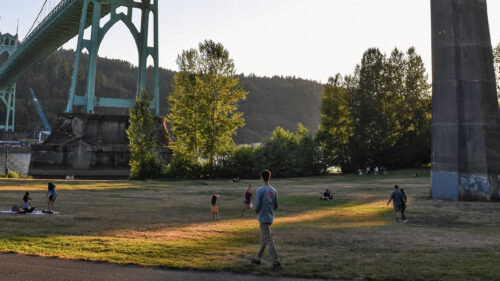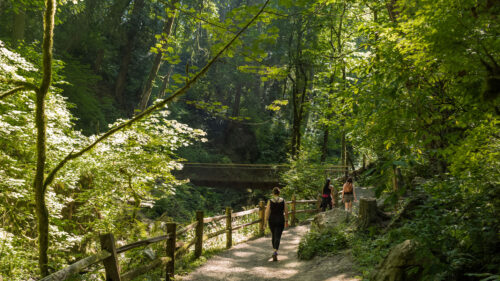









Portland at a walker’s pace rewards you with close-ups of the city’s waterfront, exuberant gardens, leafy staircases and that mix of whimsy, creativity and sophistication that’s part of Portland’s DNA. With its two rivers, 95 neighborhoods, 157 parks and 200 public staircases, no matter where you ramble in Portland, you’re always on an interesting walk. As the author of eight Portland walking guidebooks, I have many favorite routes. Here are six of them, ordered roughly from easy to challenging. Find maps with highlights or overviews linked in each walk.
Iconic Bridges on the Willamette River
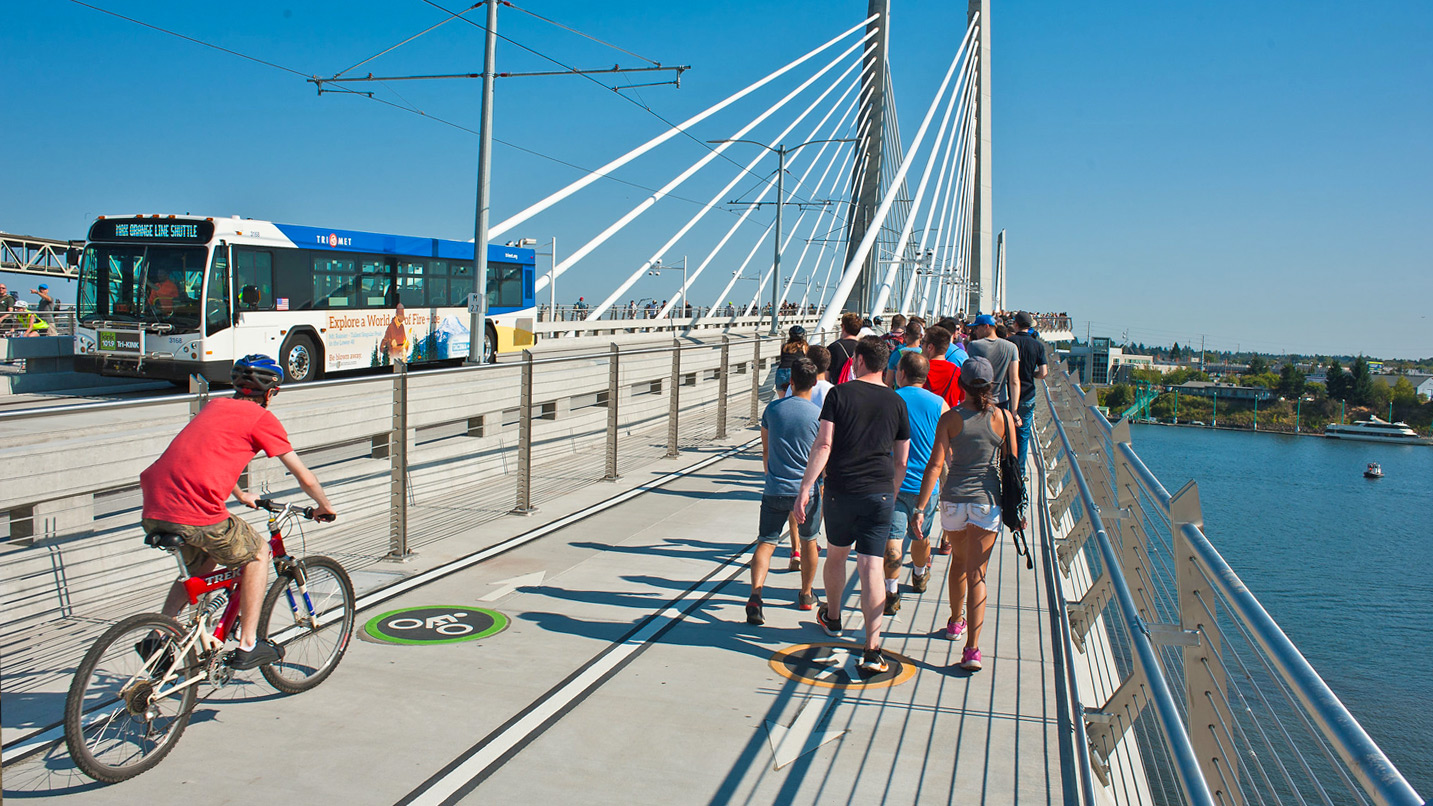
These flat loops travel along and over the Willamette River, with views of 10 bridges and the ever-changing parade of boats, birds and people.
1. Downtown Waterfront Loop
The classic 2.6-mile Downtown Waterfront Loop has been beloved by Portlanders since 2001 when its east half, the 1.5-mile Eastbank Esplanade, opened. You’ll have lots of company with walkers, bikers, runners and skaters weaving along the wide paved trail. The most scenic parts are two sidewalk crossings of the city’s oldest river bridges, the Steel (opened 1912) and Hawthorne (opened 1910).
2. Sellwood-Tilikum Loop
You’ll find a bit wilder scene on the 8-mile, riverfront Sellwood-Tilikum Loop, which includes Portland’s two newest bridges. Start at Sellwood Riverfront Park in a quiet corner of the city. As you traverse the Sellwood Bridge, the dark forest of Riverview Cemetery rises on the west bank. Once across, walk north. From a forest trail, enter the tiny neighborhood of Southwest Miles Place. Its oldest homes were houseboats until an 1891 flood tossed them onshore, where they remain to this day. Emerge from this curious oasis onto lush waterfront lawns in Willamette Park. Continue north on a riverfront path through South Waterfront, where 21st-century condo towers and parks revived former industrial land. Cross back over the Willamette on the gleaming Tilikum Crossing bridge and return via Portland’s earliest rails-to-trails conversion, the Springwater Corridor Trail.
Historic Neighborhoods on Portland’s Eastside
Portland’s eastside neighborhoods were called streetcar suburbs in the early 1900s, but today Portlanders consider them close to the city center.
3. Ladd’s Addition
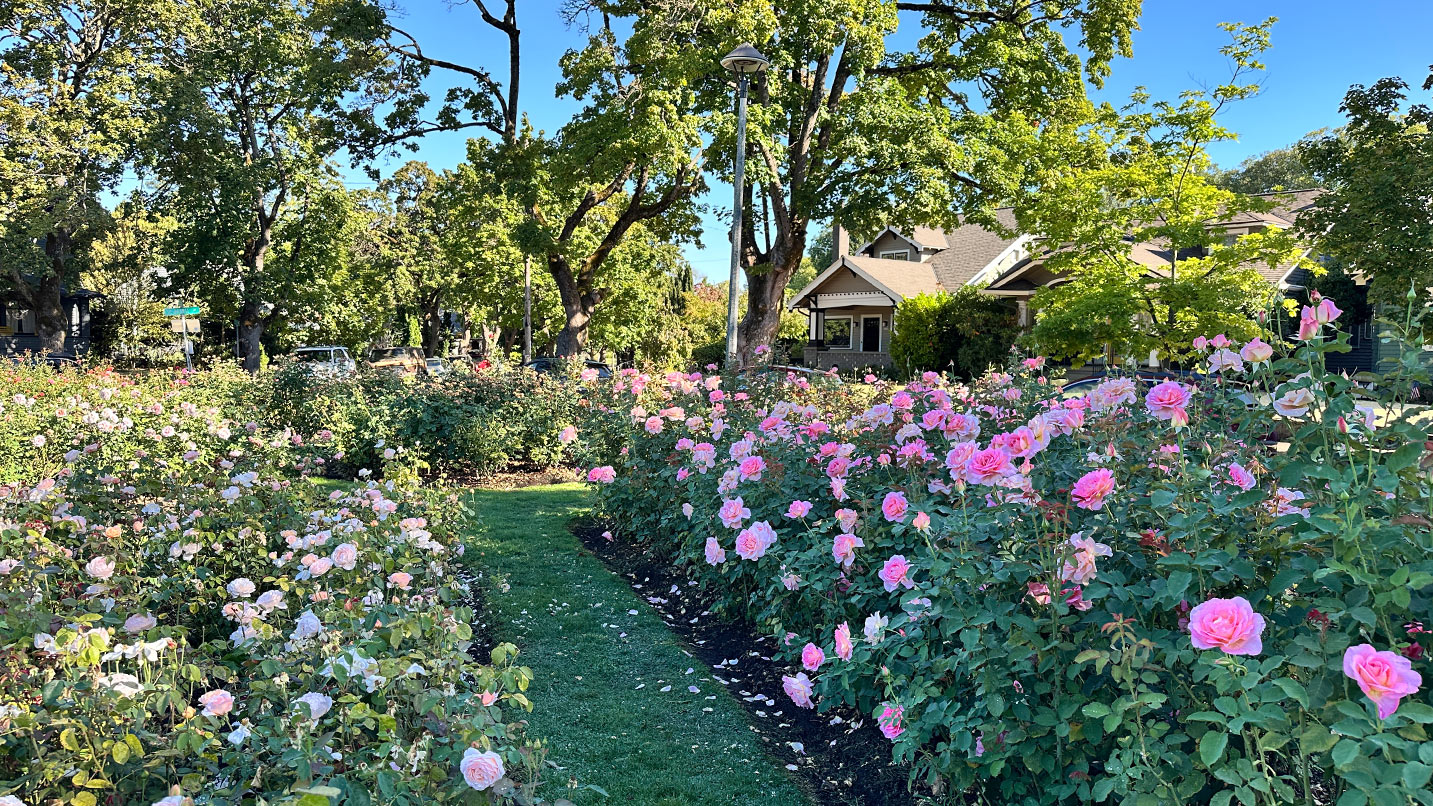
Ladd’s Addition is an easy-walking, 135-year-old district with an odd layout dreamed up by William S. Ladd, a real estate investor. Ladd ignored his land surveyor’s protests, thankfully, and today his unorthodox street grid is one of the City’s best-loved quirks. Because a right angle is hard to find here, you’ll get pleasantly lost amid Ladd’s four rose gardens, its central park and its Craftsman, Mission, Tudor and Colonial Revival homes. When you emerge from the maze, find food on Division and Hawthorne streets. Ladd’s Addition is bordered by Southeast Hawthorne and Division streets between 12th and 20th avenues.
4. Irvington
Northeast Portland’s Irvington is one of the largest National Historic Districts in the U.S. Many of its 2,800 homes were built for wealthy residents between 1900 and 1930. In World War II, its large houses were divided into apartments for shipyard workers. In the 1970s, the neighborhood began to be restored. Fifty years later, choose any walking route: Every street delivers remarkable homes and gardens. Irvington is bordered by Northeast Broadway and Fremont streets between 7th and 27th avenues, and features historic 16-acre Irving Park, once a racetrack for thoroughbred horses.
Climb Stairs in Portland’s Hills
Portland’s geologic mashup includes volcanoes, flood-formed hills and its own mountain chain, the Tualatins, often called the West Hills. Wherever a neighborhood meets a hill, you’ll find public staircases, most from the era before homeowners had cars. For a walking workout with fantastic views, take the same stairs Portland residents once used to connect to streetcar stops.
5. Alameda Ridge
Alameda Ridge in Northeast Portland is a 6-mile-long gravel bar created by ice age floods. Explore five of the ridge’s 11 public staircases on the challenging, 4.4-mile Alameda Ridge and Stairs route. Alameda’s elevation above nearby areas meant that developers in the 1910s and 1920s built impressive homes with views of the West Hills. After enjoying the architecture and sights, stop for a drink at a cafe on Fremont Street; you’ll find plenty between Northeast 40th and 50th avenues.
6. Northwest Stairs and Trails Loop
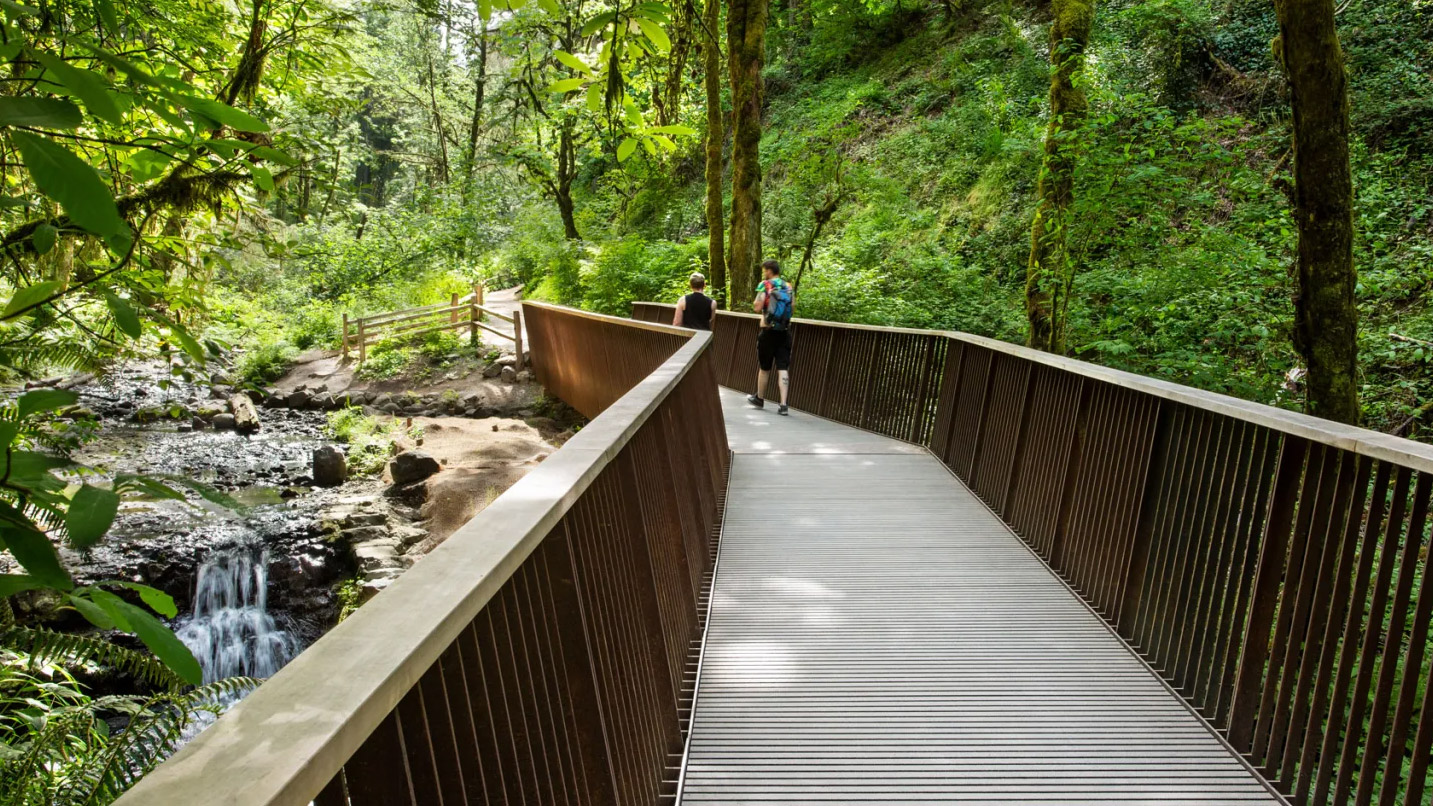
In Northwest Portland, neighborhoods terrace the slopes of the Tualatin Mountains. The 3.3-mile, six-staircase Northwest Stairs and Trails Loop Walk offers an always-changing mix of elevation and scenery. From Wallace Park, walk uphill into the posh King’s Heights neighborhood, then descend a long bridge stairway on the oldest operating bridge in Oregon, the 1905 Balch Gulch Bridge (restored 1914). The stairs deliver you into a deep forested canyon that’s hidden to drivers crossing the bridge. From under the bridge, hike along Macleay Creek in Forest Park. The loop ends as you leave forest trails for the sidewalks of Willamette Heights, a 120-year-old enclave of Arts and Crafts homes, before returning to the start.