



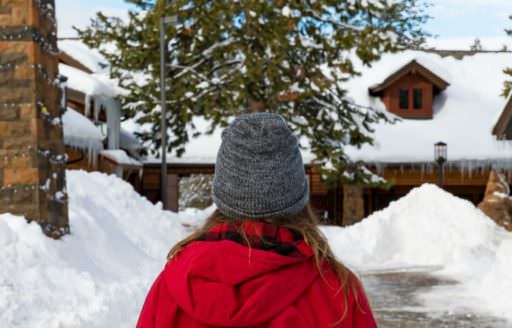
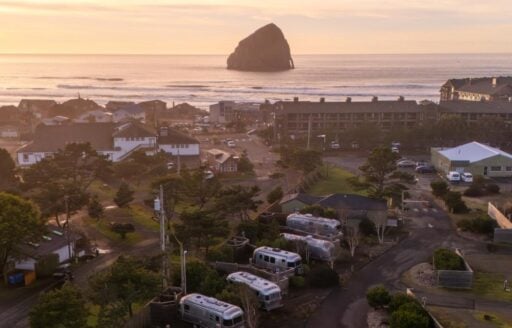
There’s nothing quite like romping in the snow — hearing the swish-swish of your skis on the slopes, tubing or tossing snowballs at a sno-park, or taking a guided snow tour through a silent forest, flurries falling all around like a giant snow globe. Oregon’s beloved wintry weather has arrived, with plenty of recreation opportunities in wide-open spaces and fresh air. Here’s how to stay safe in the snow this year.
Plan Ahead for Winter Weather
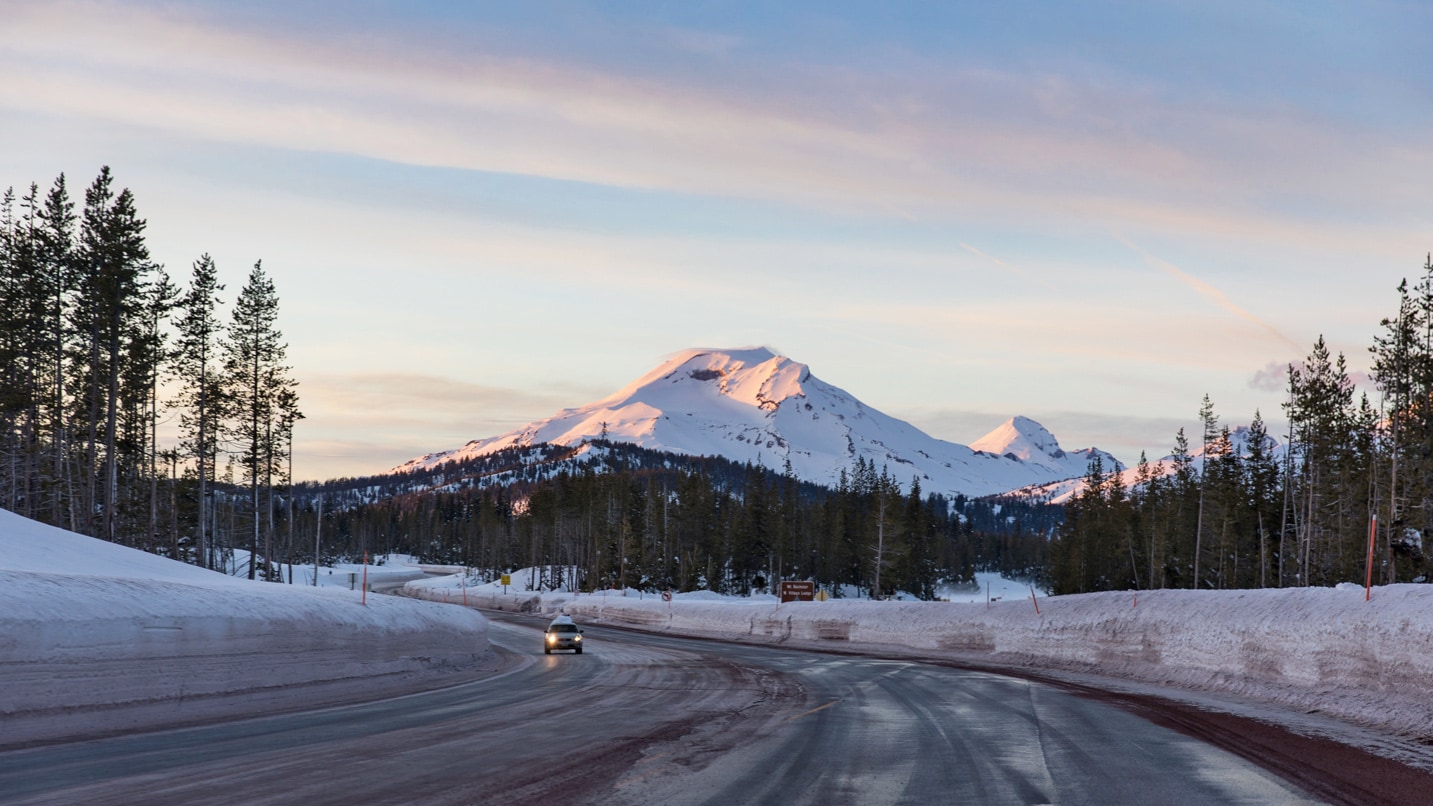
- Before you head out, it’s vital to check road and weather conditions. TripCheck shows the real-time state of roads on major Oregon highways, including live cameras at many passes and intersections. You can also dial 511.
- Bring paper maps in case cell coverage fails, and understand your route before you go. Stick to state roads wherever possible; be forewarned that GPS may attempt to take you on alternate routes that might be closed or impassable in winter.
- Allow extra travel time when the weather is bad. If the roads seem too dangerous to travel, plan to return another day.
Winter-Safe Driving Tips
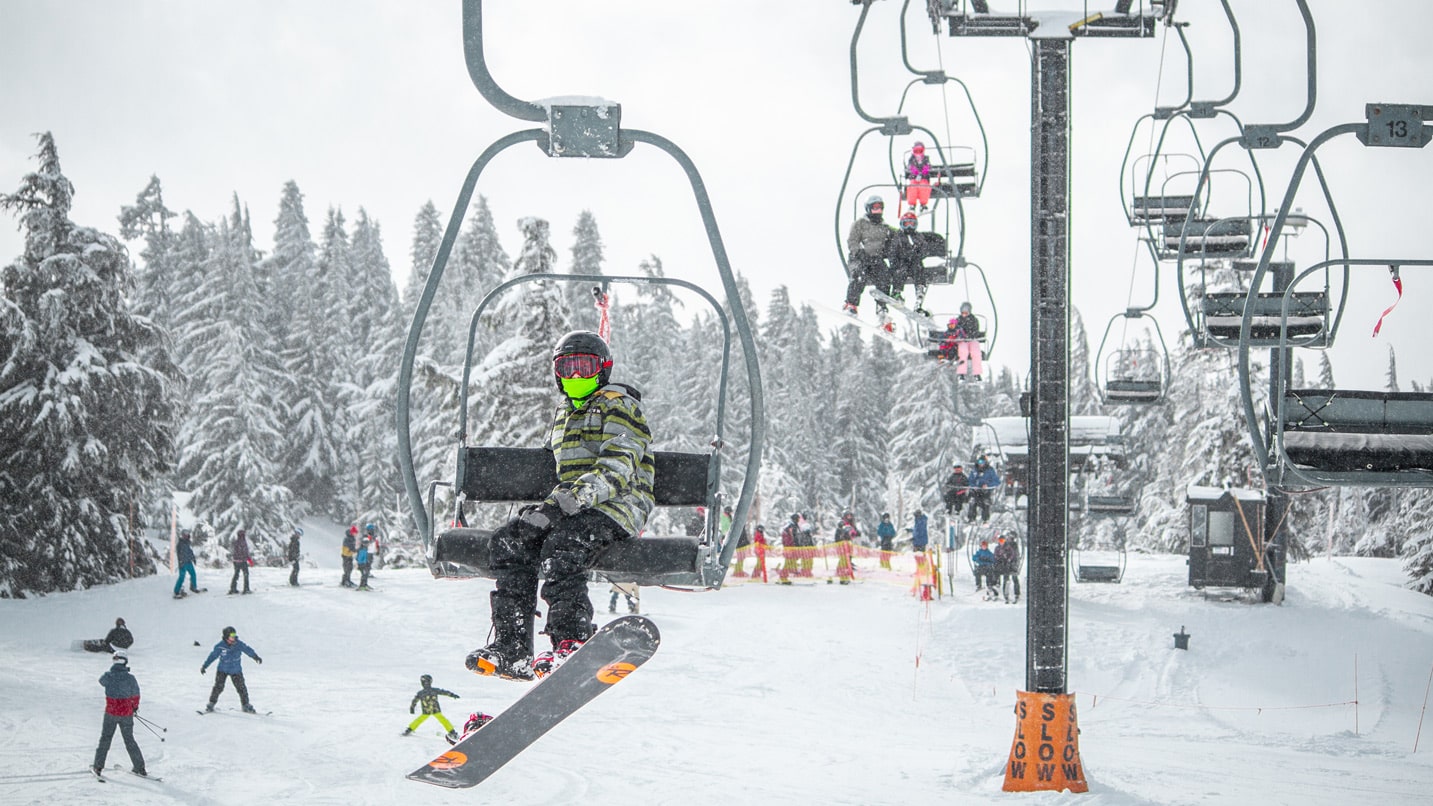
Here are some winter driving tips to keep you and your loved ones safe:
- Make sure your vehicle has clean headlights, good brakes, working windshield wipers and good tires.
- Get your brakes and tires checked beforehand — tires should be properly inflated and have plenty of tread. If you don’t have traction tires or your route requires chains in winter, purchase and practice installing chains on your tires.
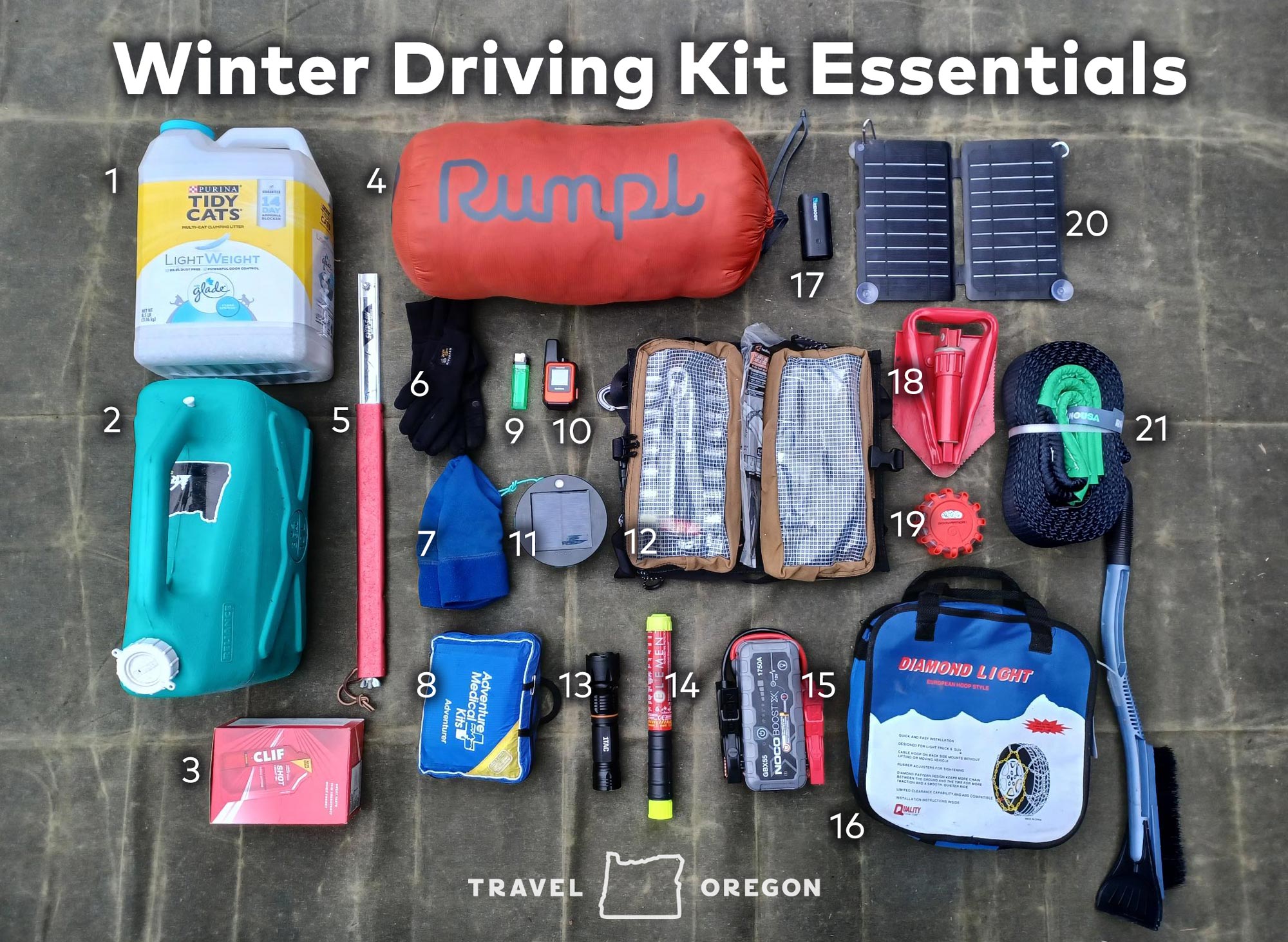
- In addition to your tire chains and first-aid kit, pack a winter car kit before you head out that’s mindful of the possibility of being stranded. Helpful items include: 1) cat litter for traction in case you get stuck in snow; 2) multiple gallons of water; 3) extra food; 4) a blanket; 5) a folding saw in case you need to clear downed trees; 6) warm gloves; 7) a warm hat; 8) a first-aid kit; 9) a lighter; 10) an emergency communications device with satellite capabilities; 11) a solar lantern; 12) a tool kit; 13) a flashlight; 14) a fire extinguisher; 15) a portable jump starter; 16) tire chains; 17) a USB battery; 18) a collapsible shovel; 19) road flares; 20) a solar panel for charging devices; 21) a tow rope; and 22) an ice and snow scraper.
- Head out with at least a half a tank of fuel in case of emergency.
- Turn on your headlights to increase your visibility.
- Always keep your eyes peeled for dangerous patches of black ice on shaded spots on the edge of a roadway, especially in the early morning when temperatures are lowest.
- Basics for driving on icy roads include slow deceleration and turns to avoid skids and wheels locking up. Be especially careful on off-ramps, bridges and shady spots where packed snow or ice lingers longer. Keep a very large distance between yourself and the vehicle in front of you. For more driving tips, see this handy guide.
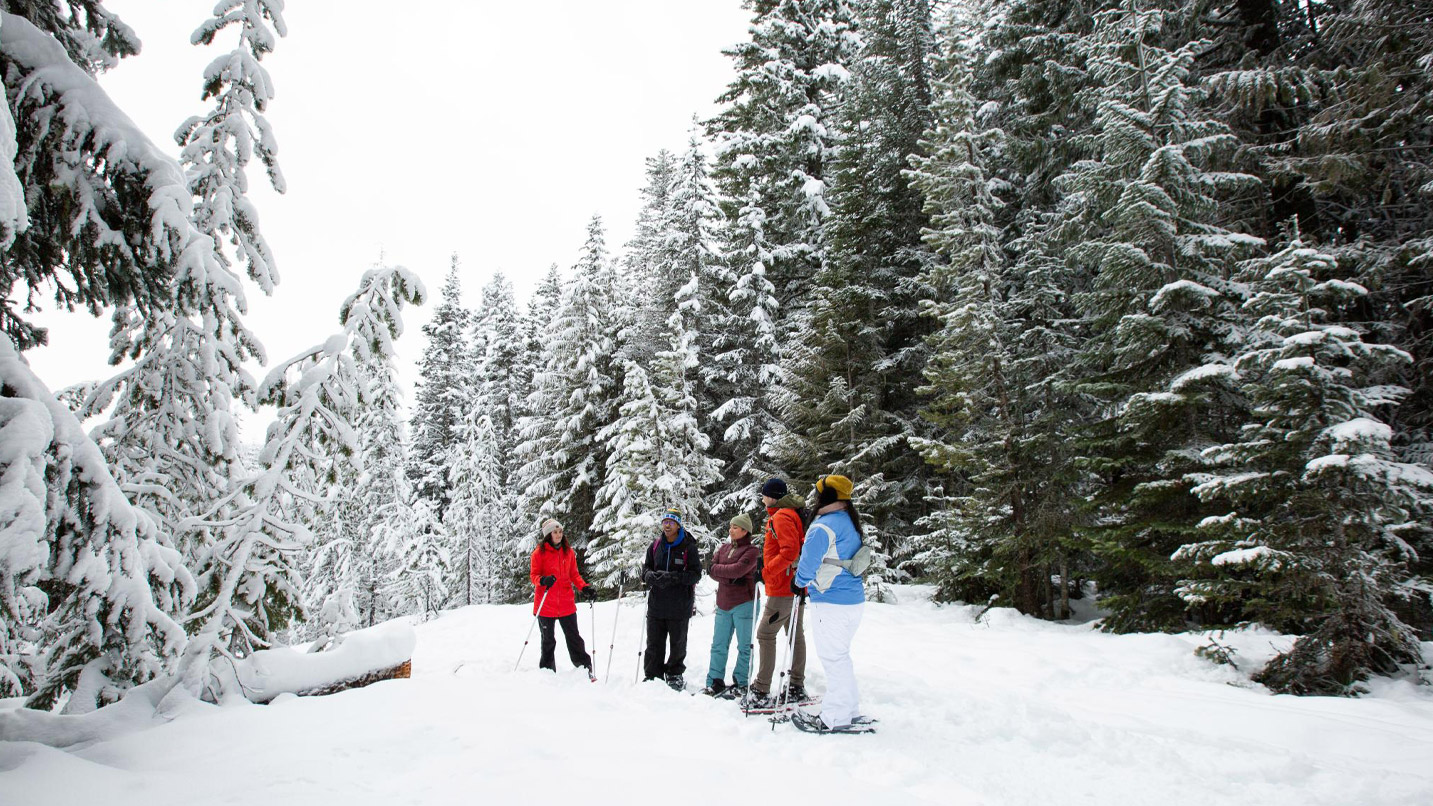
Travel Tips for Oregon’s Snow Areas
- If you’re on a ski trip, check in with the ski resort you’re headed to and see Travel Oregon’s guide to current ski areas and events.
- Sno-parks are fun for the entire family. Find everything you need to know about the sno-parks near Mt. Hood, in Central Oregon and in Eastern Oregon. Elsewhere, check directly with the Willamette National Forest, Deschutes National Forest or wherever you may be headed for the most up-to-date info on conditions.
- Crater Lake National Park is a favorite spot for snowy activities, but some amenities and entrances are closed in winter. It’s vital to check the park’s alerts page for up-to-date information.
- Consider public transit for visiting Mt. Hood. The Mt. Hood Express has a robust schedule of park-and-ride options.
- Take extra caution on Interstate 84. This four-lane highway — which stretches from Portland to Idaho and Utah — takes visitors to some of the best snow areas in Eastern Oregon, but it is known to have inclement weather that causes difficult driving conditions and closures. Particularly between Pendleton and Ontario, pay attention to significant grade increases and wind tunnels that can cause whiteouts and affect visibility. Watch for ODOT warning signs.
- If you’ll be traveling to Bend from the Salem area, know that Highway 22 is still prone to rockfall, which becomes a concern with winter rain. Here and in other wildfire-impacted corridors, watch for work crews, follow reduced speed limits and use extreme caution driving through the area.