

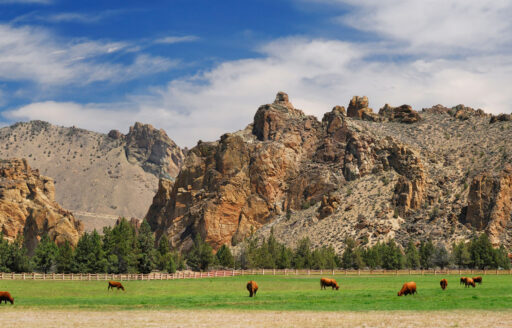











Like many states in the U.S., Oregon is experiencing another unprecedented year of wildfires. As of early August, more than 2 million acres have burned, mainly in the drier areas of Central and Eastern Oregon, east of the Cascades. Yet with the spread of wildfire smoke, residents and travelers across the state have felt the impacts.
Oregonians are doing what they have done every summer: banding together to support evacuees and rescue workers, feeding first responders, donating supplies, and helping communities by postponing their travels to a later time.
Here are 4 ways to help Oregon’s wildfire-affected people and places right now.
Oregon is a big state. Wildfires can affect travel in parts of Oregon, but impacts are often localized. Check the current Travel Alerts to see whether your destination is affected. If you’re looking for general guidance about traveling during wildfire season, read our Wildfire Travel FAQ.
1. Donate to Wildfire Relief Funds
The most direct way to help is to make a monetary donation, which allows for aid to be quickly distributed and adapted to local needs, plus your contribution is tax deductible.
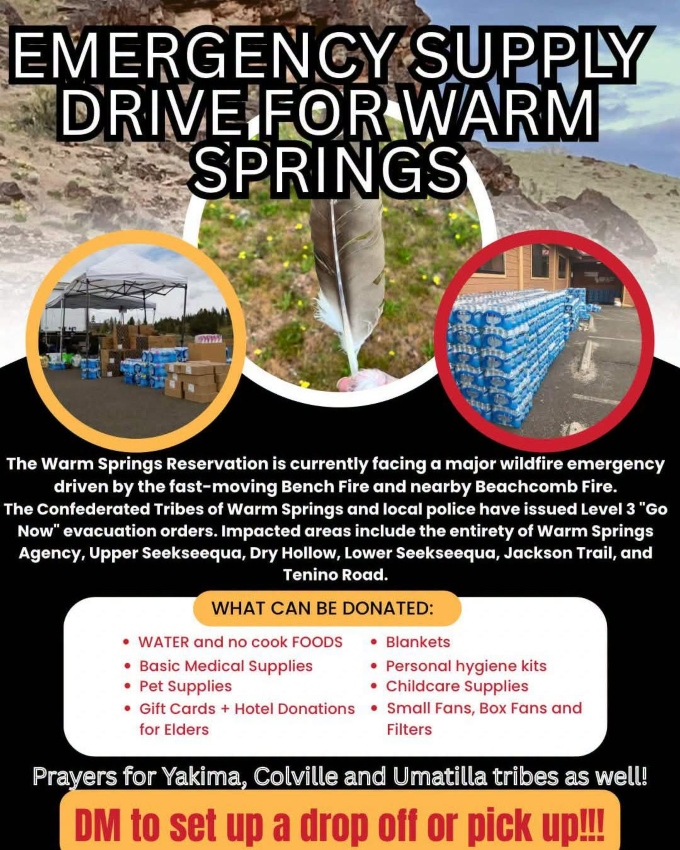
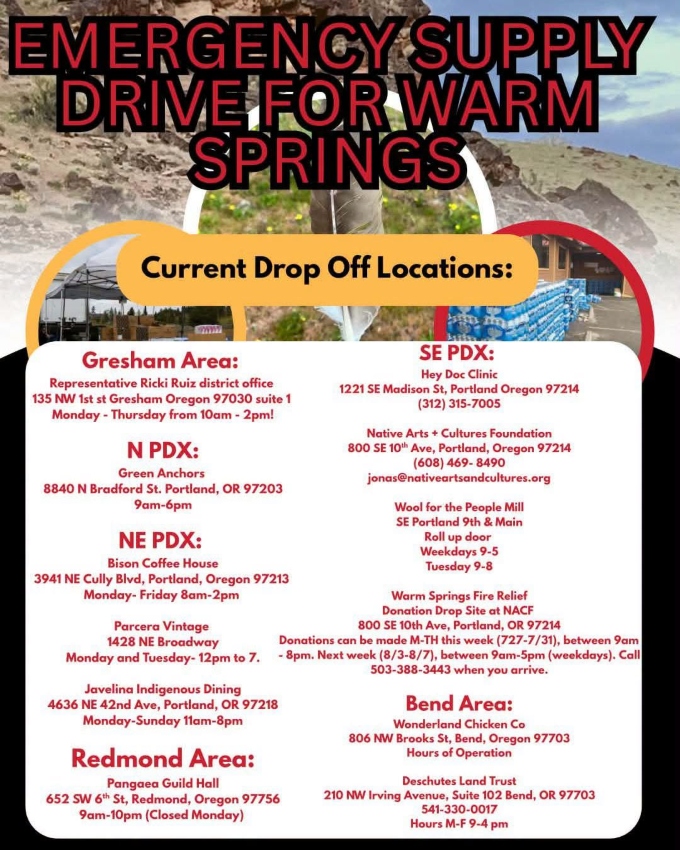
Consider supporting the residents of the Warm Springs Reservation, who were forced to evacuate during the Bench Fire. The Warm Springs Community Action Team is accepting online donations along with other immediate needs like temporary lodging, food, fuel, clothing, medications and more. See their Facebook post and donation fliers for details.
Other ways to give to fire-impacted communities statewide include:
-
- Northwest Response Fund, which enables the Red Cross to prepare for, respond to and help people recover from wildfire disasters
- American Red Cross accepts collections for three Oregon chapters: Northwest, Southwest, and Central and Eastern
- Salvation Army Cascade Division’s Emergency Disaster Services, which provides meals at evacuee locations across the state
- Oregon Food Bank Network supports local families, farmers and first responders
- Wildland Firefighter Foundation supports injured firefighters and families of those killed in the line of duty
- Keep Oregon Green, which educates public about wildfire prevention (100% of the money is directed towards its outreach efforts and not operating costs)
- Donate supplies to evacuees. Across the state, evacuation points have been designated at schools and fairgrounds. Many of them are in need of supplies such as bandages, storage bags, diapers, flathead shovels, sleeping bags, tents, walkers, wheelchairs, prepackaged food, toiletries, and new or gently used clothes and shoes. Check ahead to see what supplies are most needed.

2. Purchase Gift Cards Now for Future Travel
While you may have to postpone travel to your favorite places during wildfire season, you can show your love by planning now for your future visit. It’s easy to purchase gift cards directly for many locally owned hotels, cabins, ranches and farm stays; guided outdoor adventures; independent shops and galleries; local restaurants, breweries, wineries and coffee roasters; wellness services; and local museums or attractions (you can even give the gift of a membership).
You can also support local farms in fire-impacted areas now through their CSA boxes — many deliver to metro-area cities and include everything from fresh meat and produce to straight-from-the-farm pears, flowers, eggs, preserves and more. Be sure to buy directly from the business vs a third party so the money stays in the community. Pro tip: These gift cards make one-of-a-kind gifts for loved ones based both in Oregon and outside the state.

3. Volunteer Your Time and Services
- Consider signing up to volunteer with the American Red Cross. The most urgent needs are for licensed health professionals, blood donor support, shelter support and virtual positions.
- Donate blood via the American Red Cross’ six blood banks in Oregon.
- Check out your county’s local evacuation for tasks ranging from unloading donations, traffic control, staging support and sanitation.
- If you find a displaced pet, call the Oregon Humane Society at 503-585-5900.
- Oregon Voluntary Organizations Active in Disaster lists verified disaster relief organizations to volunteer with or donate to, plus it hosts an interactive emergency resources map that indicates groups active in each affected county.
4. Stay Informed and Be Prepared
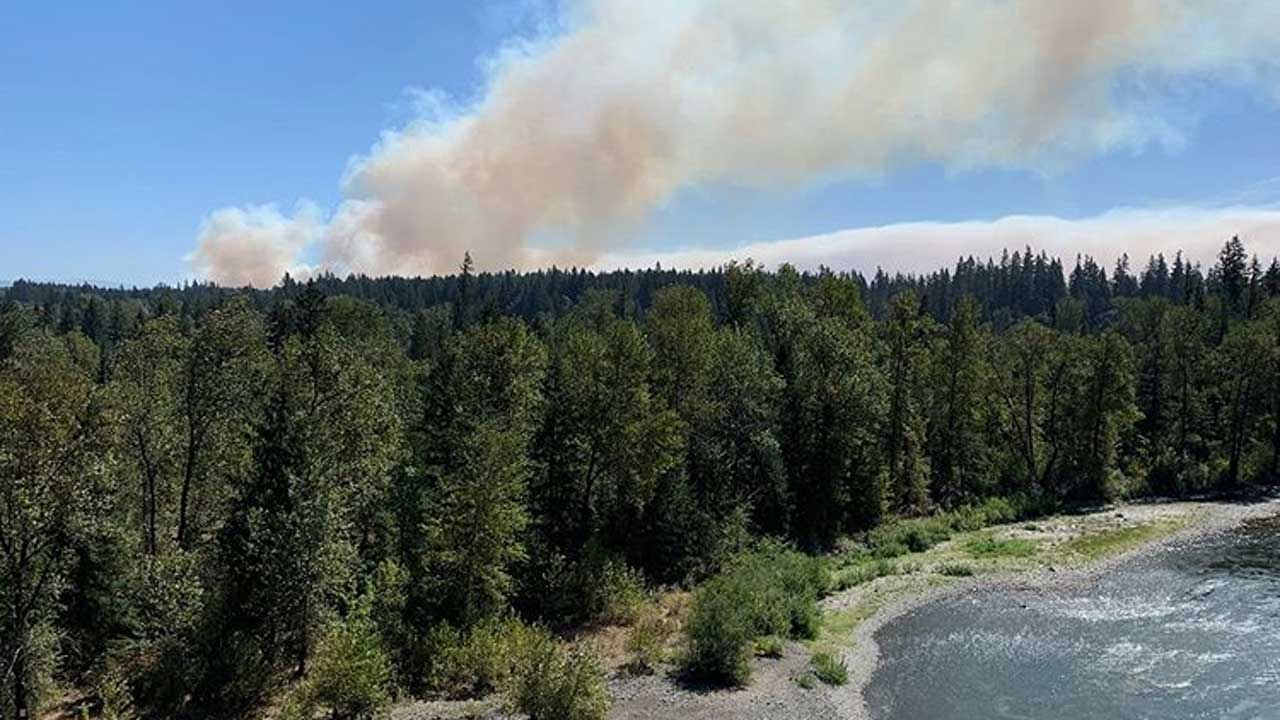
- Check fire and smoke alerts: Oregon’s Office of Emergency Management fires dashboard provides real-time updates about active wildfires, air quality and fire potential. Other resources include wildfire statuses at InciWeb and NW Interagency Coordination Center, smoke conditions at the Oregon Smoke Blog and DEQ’s Air Quality Advisories, and current road conditions at TripCheck.com.
- Respect road and trail closures: Stay off closed roads, highways and trails for your own safety for visible and invisible dangers.
- Confirm that your destination is open: Call businesses directly, or check their social media sites, which are more likely to be timely than websites.
- Head to these campgrounds: If you are looking for places to camp in August that are not impacted by smoke or fires, here are two great options with capacity: Goose Lake State Recreation Area for tent and RV camping) or Willamette Mission State Park (for group camping, tent camping and first-come/first-served). Also try Oregon State Parks’ Camping this Weekend function online – there are some surprising locations that have last-minute availabilities.
- Find travel alerts specific to Oregon regions here: Southern Oregon, Willamette Valley, Mt. Hood/Columbia River Gorge, Mt. Hood Territory, Washington County and Central Oregon.