
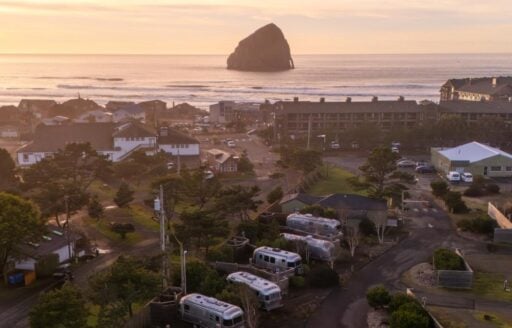
Walking along the misty, otherworldly beaches of Oregon’s South Coast in late summer and fall, you might stumble across all kinds of surprising flotsam and jetsam.
Until about a decade ago, you’d almost always see a beach staple, bull kelp seaweed with its long snake-like tail, washed up on shore. When the first storms came around in fall, you’d find massive rolls of last season’s kelp on the beach in huge quantities, loosened from holdfasts on the rocky bottom.
Today it’s unusual to find much kelp on the beach. Bull kelp is disappearing in many areas on the Pacific Coast. Thanks to the effort of a very special team of scientists and conservationists known as the Oregon Kelp Alliance, however, restoration efforts are underway. Here’s what they’re doing and fun ways to learn more about kelp forests on your next trip to the Oregon Coast.
Why Kelp Forests Matter
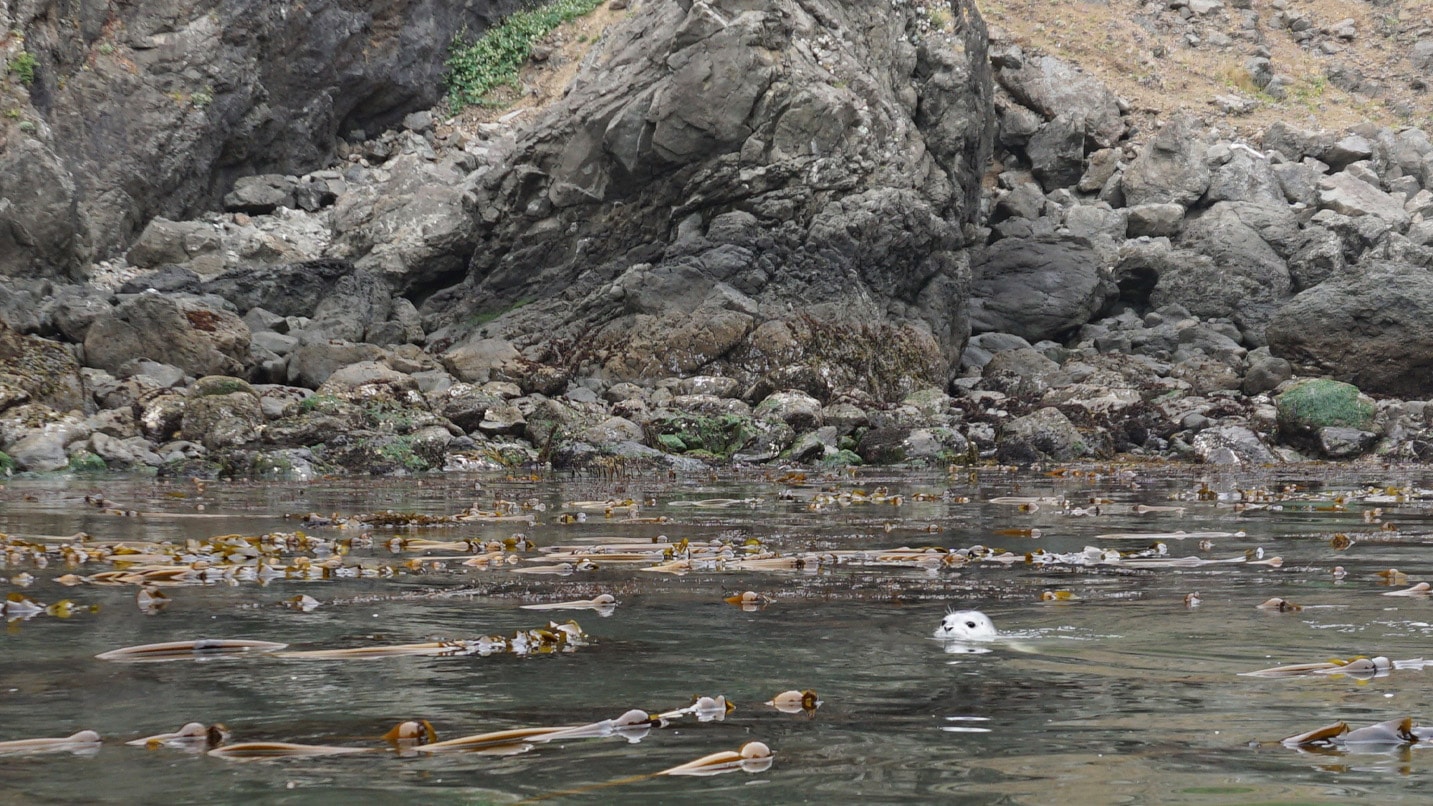
Considered a keystone species — one that plays a critical role in keeping an ecosystem healthy and balanced — kelp sequesters carbon, prevents coastal erosion, and provides sustenance and protection for many critters that depend on it.
One of many types of kelp that grow in the waters on the Oregon Coast, bull kelp is one of nature’s coolest designs. Whiplike stalks known as stipes that grow up to 100 feet long are anchored to rocks underwater, and each rises stipe-up toward the surface due to a gas-filled, bulbous head. Each head has many leaflike blades growing out of it like streaming hair.
This brilliant evolutionary adaptation creates an underwater forest in certain areas of the Coast, providing critical habitat for marine life in a protective canopy close to the ocean’s surface.
In the past decade, however, the delicate balance of the kelp forest has been disrupted due to a series of ecological crises like climate change and disease, and the population of bull kelp has severely declined. Oregon Kelp Alliance director Tom Calvanese says that in Oregon, it’s estimated that 70% of kelp forests disappeared from 2010 to 2022, destroying the ecosystem they create.
“It’s like a clear-cut when the kelp is gone,” he says.
Since kelp is an annual seaweed, it can’t regenerate for the next year if it is not present in the current year. This wreaks havoc with a complicated ecosystem in coastal waters — habitat for all kinds of ocean dwellers. In this forest live sea plants and creatures like commercially valuable fish, crabs and sea stars that cohabitate with marine mammals, including otters, seals and gray whales.
This continuing problem has impacted the species that rely on this special habitat, including humans. It’s also now believed that the earliest humans evolved and migrated southward on the Pacific Coast along this nutrient-rich “kelp highway.” At a recent symposium in Coos Bay, Oregon Kelp Alliance board member and Coquille Indian Tribe representative Shelley Estes shared this and other deep cultural connections coastal tribes have with the kelp forest, including First Foods like the now-threatened abalone that once thrived there.
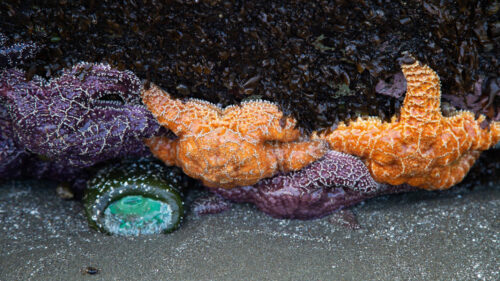
One of these species, the Pacific purple sea urchin, has compounded the problem. One of its natural predators, the stunning 24-armed sunflower sea star, was nearly wiped out by a wasting disease that swept the Oregon and Northern California coasts between 2013 and 2017. Without this predator to control the urchin population, these kelp-loving critters contributed to the destruction of the kelp forest. Unfortunately, voracious urchins are able to survive only eating once a year, so they devour any new kelp growth before plants have a chance to mature, creating what’s known as urchin barrens.
How Conservationists Are Restoring Ocean Habitat
Here’s where the good news comes in. Since 2023 the Oregon Kelp Alliance has been assessing the problem and is now working on creative solutions, thanks to a NOAA Fisheries grant and others.
The most important of these is establishing new populations of kelp. In 2025 the team built sustainable platforms with 60 juvenile bull kelps embedded in them and deployed bags containing millions of kelp spores at three locations. These include Kiwanda Rock (also known as Pacific City’s Haystack Rock, offshore at Cape Kiwanda State Natural Area), Nellie’s Cove in Port Orford and Macklyn Cove in Brookings, near Chetco Point Park. Two dozen sunflower sea stars were transplanted on-site and over 300,000 sea urchins were removed by professional divers and Reef Check volunteers.
In 2026 the work continues, and similar restoration projects have begun at three more sites: Cape Lookout near Tillamook; Cape Foulweather near Otter Crest State Scenic Viewpoint in Depoe Bay; and Drake Point near Shore Acres State Park, southwest of Charleston.
Calvanese also notes that additional grants will help create restorative kelp mariculture at the Port of Port Orford and nearby, including installing 30 vertical state-of-the-art kelp moorings with temperature and light sensors to cultivate kelp for culinary use, animal-feed supplements, fertilizer and other commercial uses.
Visit the Coast to Learn More About Kelp and Coastal Ecosystems
Carl Henderson, the alliance’s program and administrative assistant, says visitors should look for kelp growing on the platforms in summer — for the best vantage points, look on the west side of Macklyn Cove or gaze down from the bluffs into the water of Nellie’s Cove as you hike the trail on the Port Orford Heads.
In 2026 the team plans to partner with organizations like Seven Capes Bird Alliance and Friends of Otter Rock Marine Reserve to offer interpretive events in summer. Check the alliance website for information as it comes.
At any location, Calvanese urges tide-poolers and recreational divers to “keep a lookout for the many-armed kelp forest defenders,” an apt way to describe the sunflower sea star. Share findings and your photos on the iNaturalist app, which can be used by scientists to help learn about changing populations.
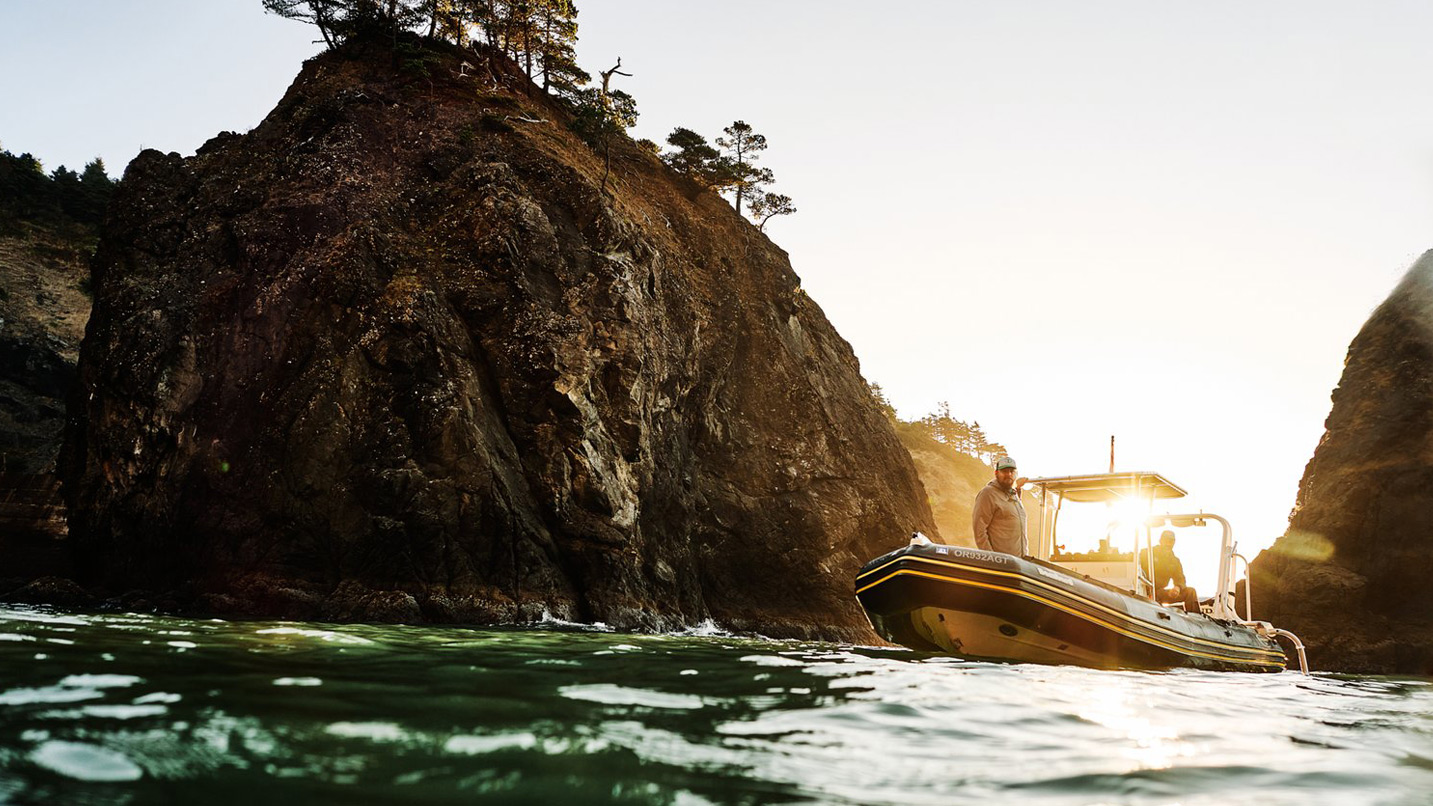
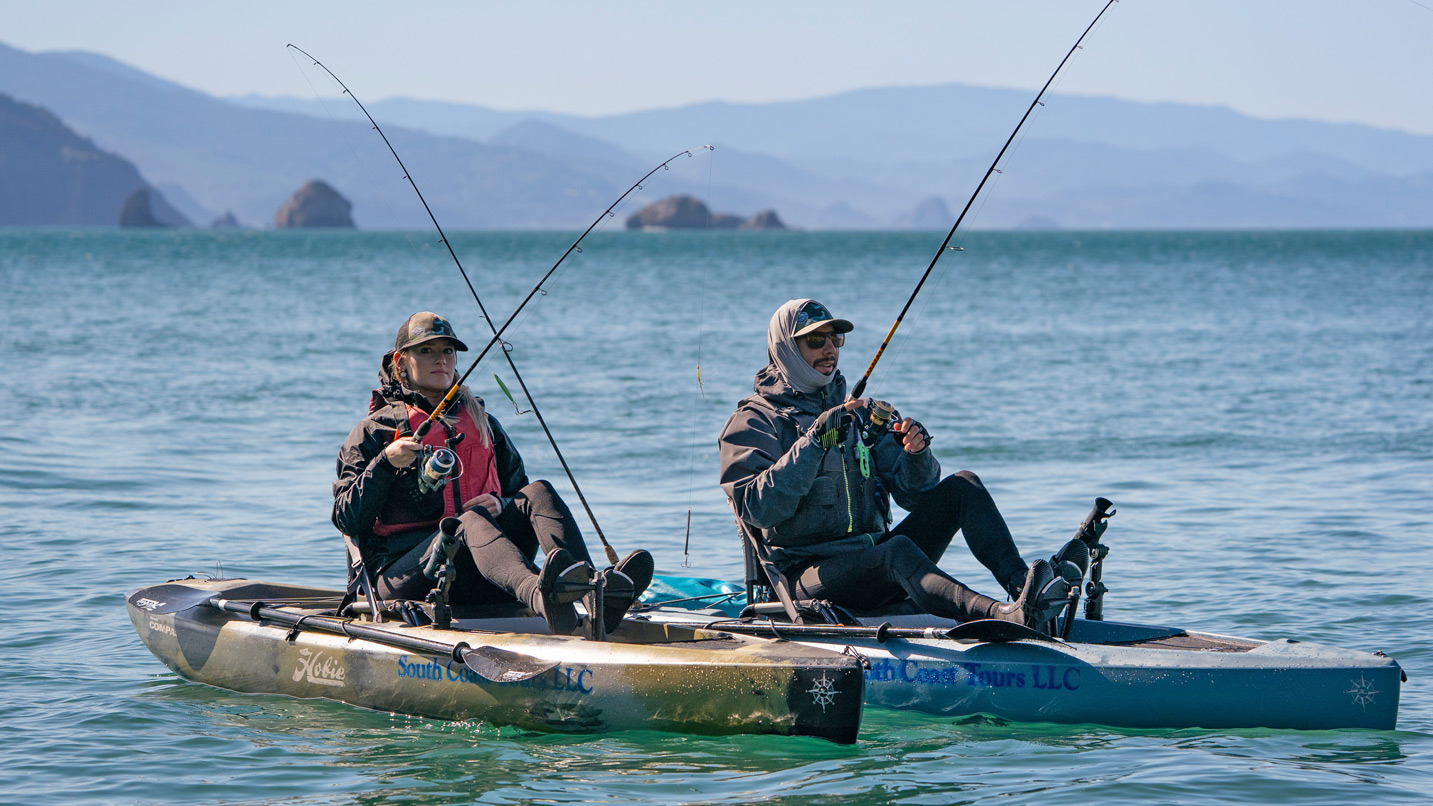
For immersive learning in the Pacific Ocean, South Coast Tours offers guided kayaking and sightseeing boat trips. Don’t miss a trip on its new oceangoing Zodiac inflatable vessel, the Black Pearl, which also assists the kelp researchers. Snorkel underwater, fish from a kayak, watch whales or learn how to forage your own sea fare at locations from Charleston to Brookings.
For tide pool explorations, seaweed-art workshops and foraging forays, join science educator Alanna Kieffer and the team at Shifting Tides from spring through fall at various sites. Each February she co-organizes Winter Waters, a series of educational events in locations all along the Oregon Coast. To focus on foraging sea plants and other coastal edibles, reserve a spot in one of respected naturalist John Kallas’ Wild Food Adventures on the Coast.
Get Inspired by Kelp Art and Uni
In galleries throughout the Oregon Coast, look for seaweed-inspired works, including jewelry modeled on the sinuous bodies of sea plants, sculptures and multimedia work made of kelp. Printmaker Duncan Berry creates seaweed and fish gyotaku ink prints, which are viewable at galleries like RiverSea Gallery in Astoria.
In Bandon local artist Vicki Affatati partnered with the Port of Bandon and fellow artists to create the Great Kelp Forest Mural Project, including a 512-square-foot mural of a kelp forest on the Port’s fisheries building along the waterfront. In Portland artist Mike Bennett invites families to watch otters at play in a cartoon Oregon Coast kelp forest in his interactive exhibit, the “The Portland Aquarium.” Look too for exhibits and events featuring the work of artists like Jasmine Novack — who documents her dives underwater into kelp forests in shimmery, immersive video installations.
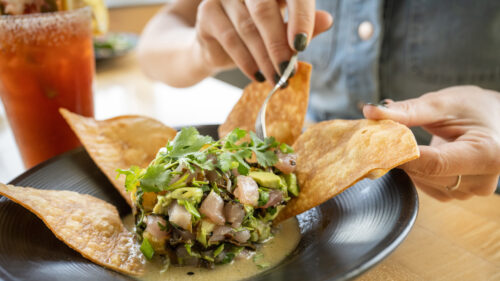
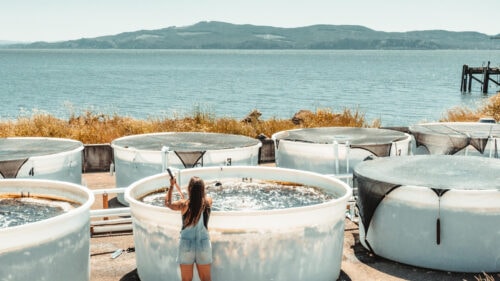
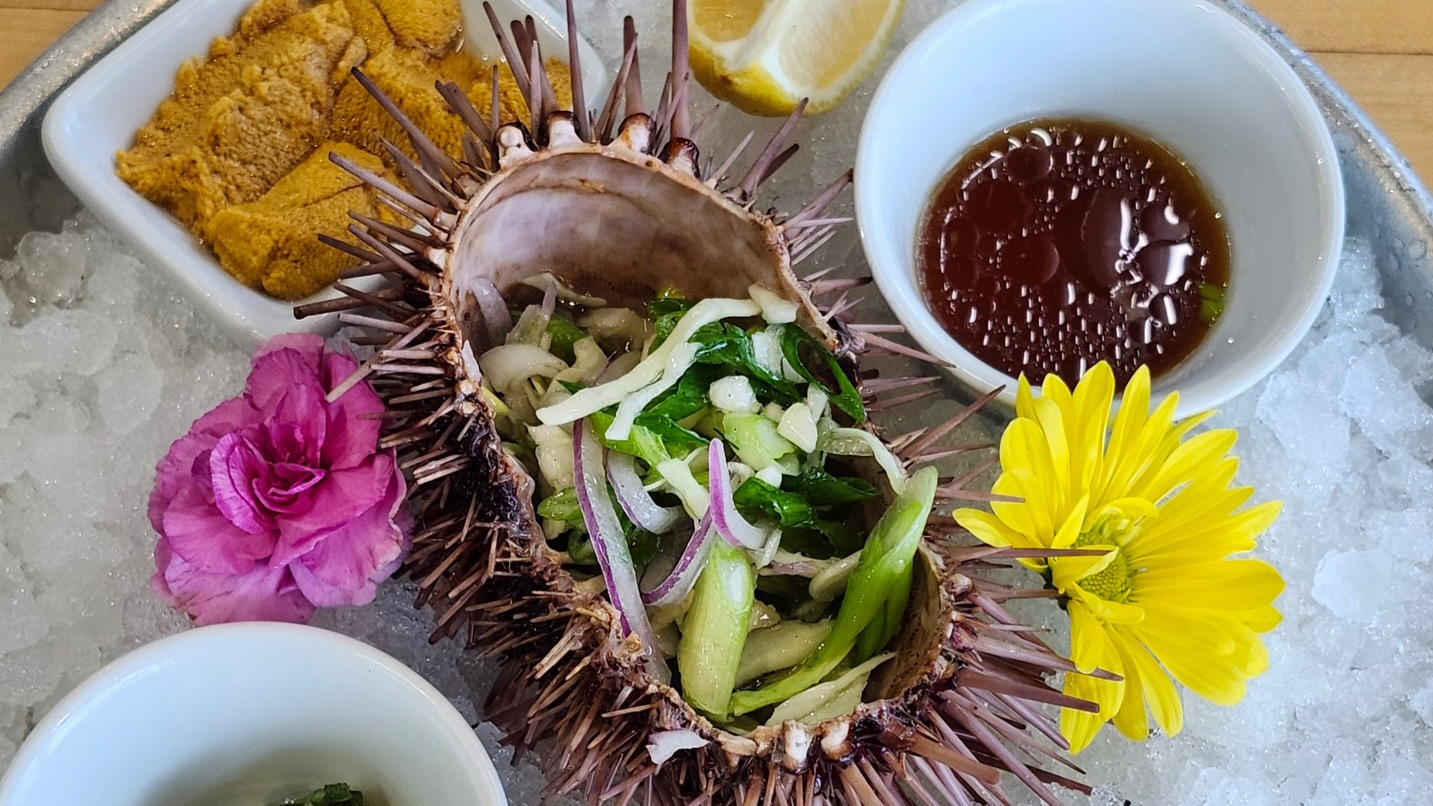
For those interested in trying wild sea urchins as uni — a sushi-style delicacy in Japanese cuisine — several initiatives are taking place on the Oregon Coast to ready purple urchins for market. At Oo-Nee Sea Ranch in Newport, for example, urchins gathered by commercial divers near Cape Arago are fattened up on cultivated dulse before being sold to upscale restaurants. Look for ranched urchins at Winter Waters and other seafood events, or as occasional specials at sea-to-table restaurants on the Coast. At the new Port Orford Seafood Market, a dockside pop-up fisherman cooperative that sells freshly caught fish on select summer weekends, you may find urchins harvested direct from the sea by professional divers.