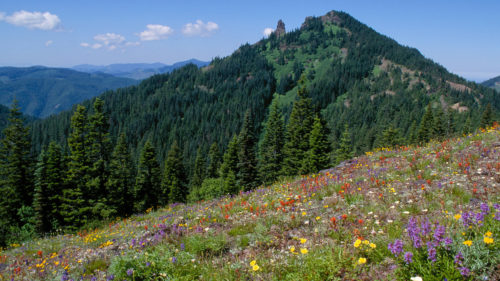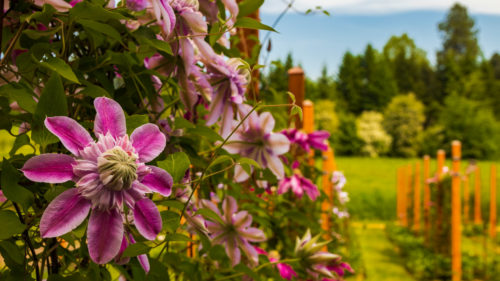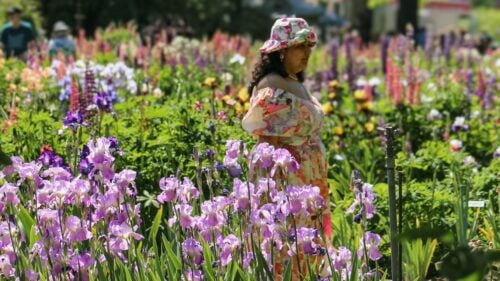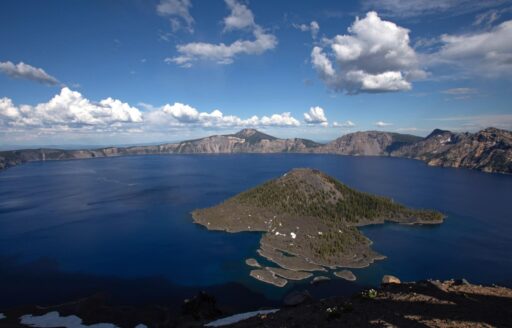







Hiking in spring and early summer is a treasure hunt of color as wildflowers bloom in the meadows and mountains of Oregon. At lower elevations, wildflowers are typically at their peak in May and early June, and they bloom well into July and August on Mt. Hood and in mountain meadows across the state.
Look for blossoms on these trails around the state. While these flowers may be tempting for a spring bouquet, keep in mind that they are for viewing enjoyment only — it is illegal to pick wildflowers growing on public land in Oregon.
Mt. Hood & the Columbia River Gorge
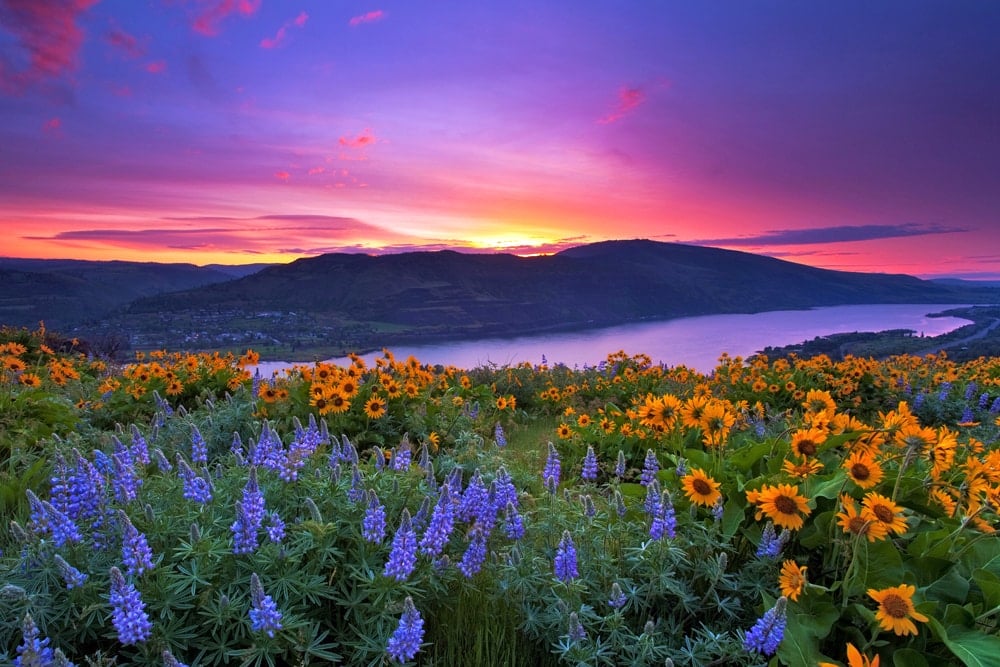
From Portland, head east along the Columbia River Gorge to Mosier Plateau for 3.5 miles of easy switchbacks, a waterfall, a walk through a pioneer cemetery, and cheery wildflower meadows in April and May. There’s not just one viewpoint at the top here but views throughout. Bring the family, the dogs and a picnic, and make sure to wear sunscreen, since it’s not shaded.
Nearby Rowena Plateau at Tom McCall Nature Preserve is an easy, 2-mile round-trip hike across the plateau toward the Columbia River. Look for an explosion of balsamroot, bachelor buttons and white yarrow. For more of a challenge, start at the same parking lot and take the steep climb up to Tom McCall Point, roughly 3 miles round-trip. You’ll see the purple lupine and scarlet Indian paintbrush. To the south, Ball Point in the Badger Creek Wilderness is a 7.2-mile journey through the dry eastern foothills up to a sweeping viewpoint. Expect the signature balsamroot, lupine and Indian paintbrush as well as prairie star and death camas. Note that dogs are not permitted at Tom McCall Nature Preserve.
Willamette Valley
Cone Peak Trail, 36 miles east of Sweet Home, leads hikers through shady, forested trails to wildflower meadows with yellow stonecrop, pink penstemon and purple larkspur in June and July. See plenty of flowers along the 4.8-mile round-trip trail, or continue along the Iron Mountain Trail for about 7 miles in all, and be rewarded with panoramic views of the Cascades from a beautiful lookout platform at the summit. The area is home to more than 300 types of wildflowers, including flax, penstemon, yarrow and saxifrage — all popular with hummingbirds, so look for them, too.
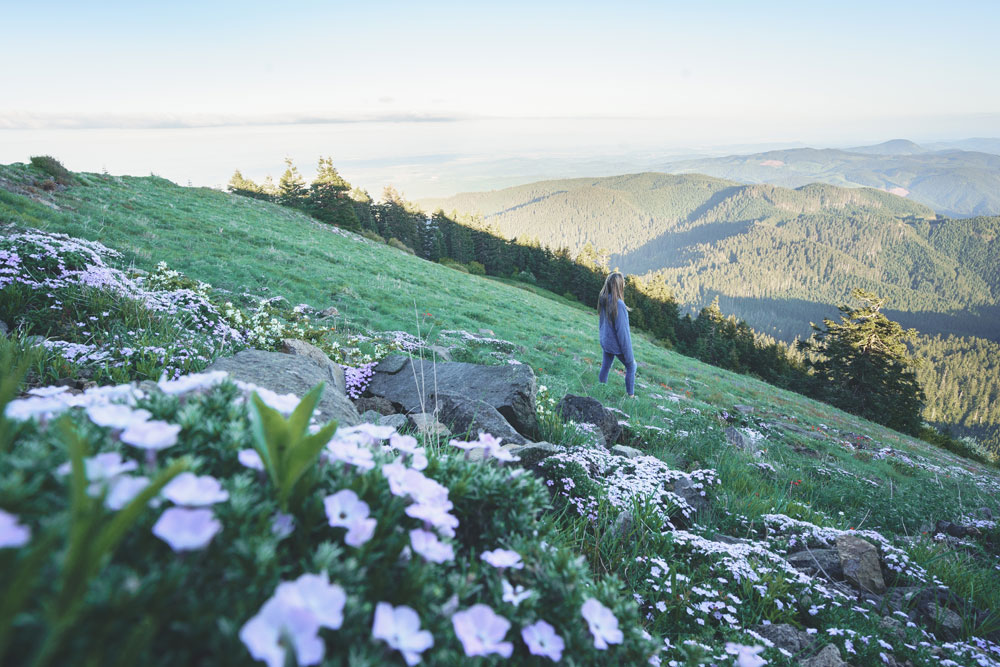
At 4,097 feet, Marys Peak sits west of Corvallis and is the most prominent peak on Oregon’s Coast Range, with sweeping views of the Pacific Ocean to the west and numerous peaks across the Willamette Valley to the east. With several trails to choose from, you can see wildflowers blooming in the meadows and rock gardens near the summit between late spring and summer. Look for glacier lilies, scalloped onion, harsh Indian paintbrush, Cardwell’s penstemon, spreading phlox and other species that aren’t usually found in the Coast Range.
Central Oregon
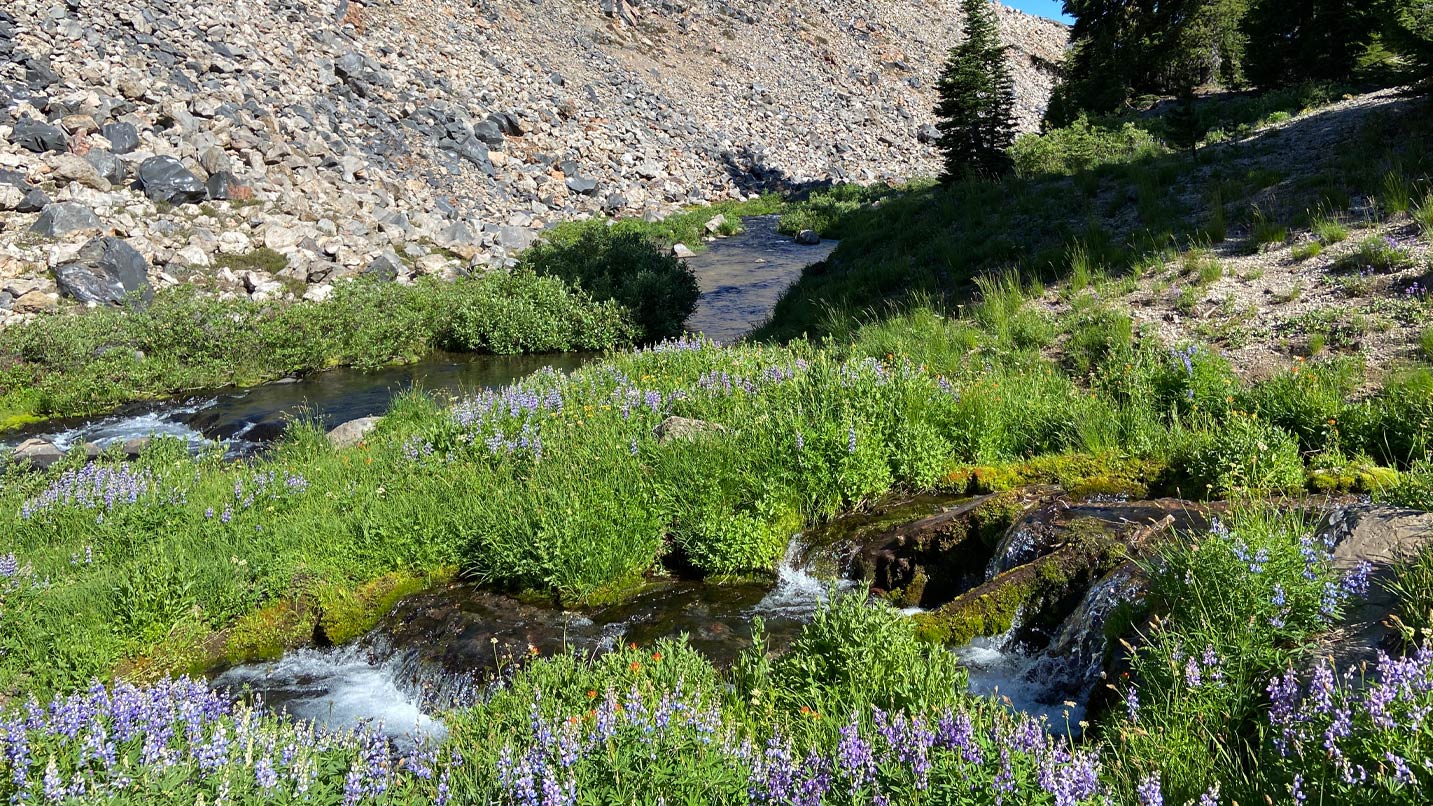
Green Lakes Trail, roughly 25 miles west of Bend, is a locals’ favorite — a moderate, 9- to 11-mile hike that climbs alongside Fall Creek in the Three Sisters Wilderness. Magenta paintbrush, lupine and Lewis’ monkeyflower bloom in late summer. Go on a weekday or off peak hours in the summer for more solitude. Dogs need to be on leash between July 15 and September 15, and a Central Cascades Wilderness Permit is required between June 15 and October 15.
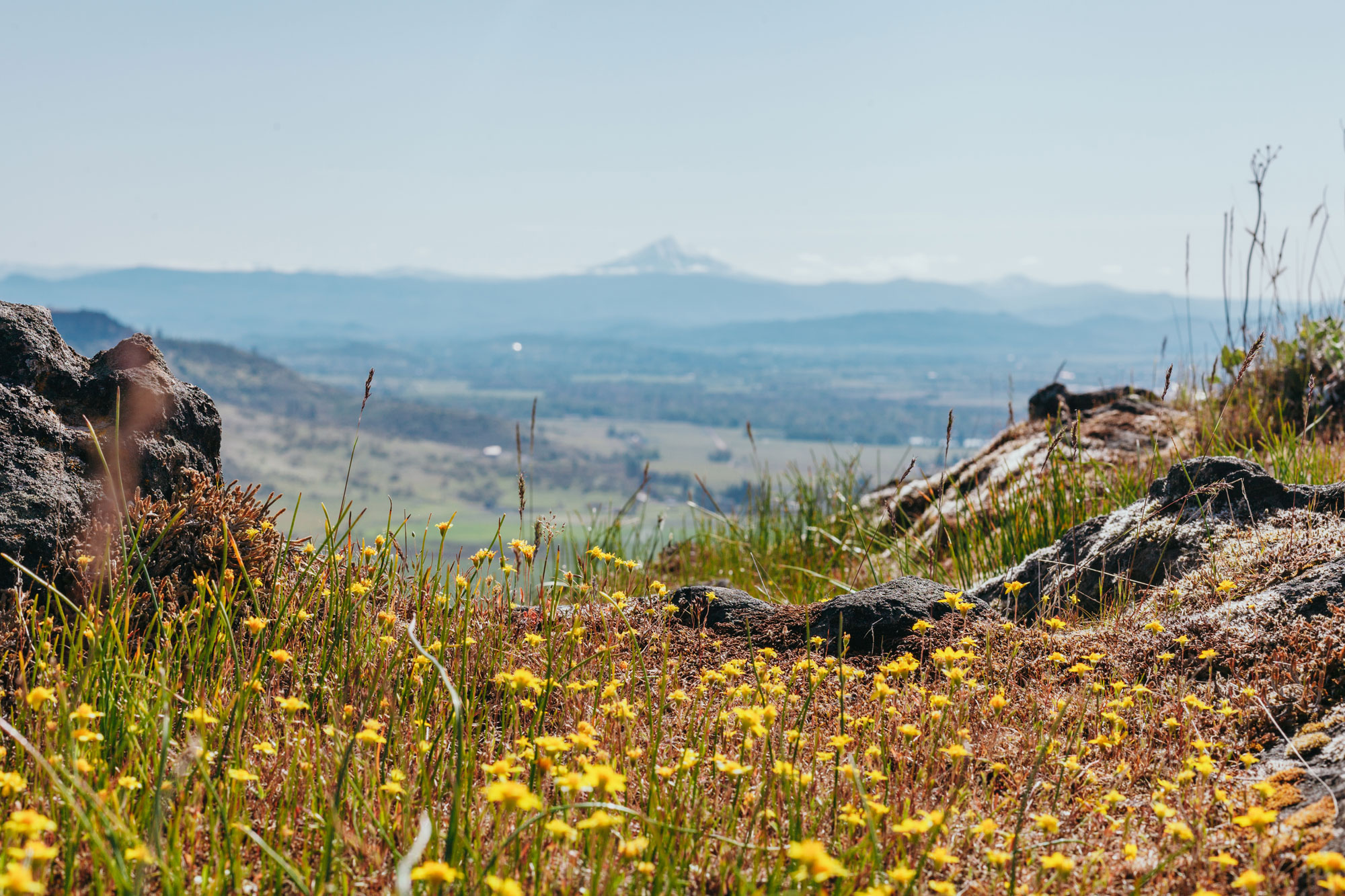
Located on Bureau of Land Management land just north of Terrebonne, Scout Camp Trail is a gorgeous springtime desert hike with views of the Deschutes River canyon. The 3-mile loop is steep but worth the trip for sightings of goldthread, yellow bell and bitterroot.
Near Sisters, the Whychus Canyon Preserve offers 930 acres and more than 7 miles of hiking. For flower peeping, Whychus Rim and Creek Loop is a 4.8-mile trail that shows off its colors in spring. The desert landscape is filled with a vibrant mix of western columbine, arrowleaf balsamroot, prickly phlox and western blue flax. Be sure to check the preserve’s website for restoration-related closures.
Southern Oregon
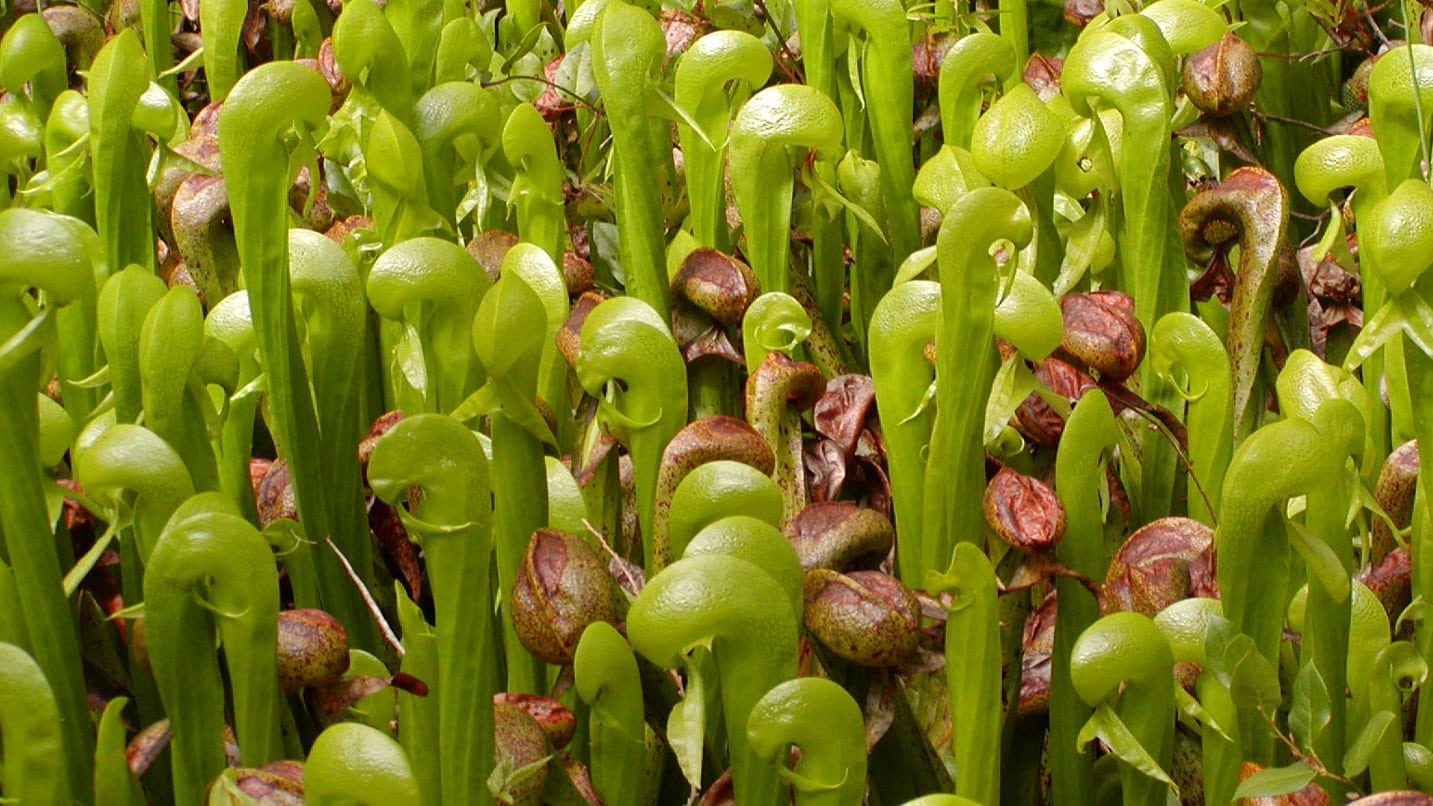
The remote Eight Dollar Mountain Trail is one of the most significant botanical sites in Oregon. Roughly 25 miles southwest of Grants Pass, the site is known for its serpentine soils and wetlands of Darlingtonia californica, better known as the cobra lily. The lily gets its name from its curious green and red-speckled bulbous head — actually a leaf — which rears up on a long stalk like a cobra. It’s even prettier when its little flowers bloom in the spring. It’s also carnivorous and the only member of the pitcher family growing wild in Oregon. A wheelchair-accessible boardwalk trail leads you to this protected site. Other wildflowers along the trail bloom into August.
Wildflower enthusiasts will have a field day spotting the multitude of flowers and wildlife, such as deer and black bear, at Mt. Ashland Meadows, one of the more accessible sections of the Pacific Crest Trail. Between mid-June and mid-November, wander along the grand fir trees lining parts of the 7.3-mile lollipop loop to the summit, or shuttle in halfway by car or bike to Grouse Gap, where a picnic shelter awaits. Blooms cover trailside meadows in June and July. It’s a quick jaunt back to civilization, 2 miles from the Mt. Ashland Ski Area parking lot.
Hundreds of wildflower species grow on the Table Rocks near Central Point, including the extremely rare dwarf woolly meadowfoam — which blooms in April, and grows on top of the Table Rocks and nowhere else in the world.
Oregon Coast
The rugged Kings Mountain Trail on the Coast Range is a challenging 5-mile round-trip hike inland from Tillamook. Find beargrass, penstemon, phlox and the rare phantom orchid. Near Lincoln City, the Nature Conservancy’s Cascade Head Preserve offers a 5-mile round-trip trail to the headland’s lower viewpoint to see rare wildflowers, including hairy checkermallow and the Cascade Head catchfly — 99% of the world’s catchfly population is found only here.
North of Reedsport, the Tahkenitch Dunes National Recreation Trail rewards hikers looking for diversity. The 6-mile loop trail begins in a conifer forest before opening up to sand dunes and views of the ocean, then circling by Threemile Lake. You can find spring-flowering rhododendron, salal and Oregon grape in the forest, as well as sand lupine and beach pea in the dunes. If hiking from March 15 to September 15, check out seasonal beach restrictions to help protect the western snowy plover.
Just south in Florence, Darlingtonia State Natural Site is another place to spy the rare cobra lily. In fact, this 18-acre botanical park is dedicated to the protection of only this species. It’s also easily accessible, with parking and a boardwalk trail.
On the South Coast, Port Orford Heads State Park is home to a number of hikes where you’ll find beautiful flowers, such as coast lily and coastal gumweed — all while glimpsing stunning cliffs and sea stacks offshore. On the headland trails, you’ll hike through a forest of mixed conifer into rugged headlands, spotting wild iris, cat’s ear and hot-pink salmonberry flowers.
Eastern Oregon
The John Day Fossil Beds are worth a visit year-round, but wildflowers add to the landscape’s rich color palette April through October. Take an easy stroll along the Clarno Unit trails to see mariposa lilies, orange globe mallow, purple sage, prairie clovers and more between late May and early July. Look for golden bee plants, hedgehog cactus and bitterroot along the five Painted Hills trails between April and May.
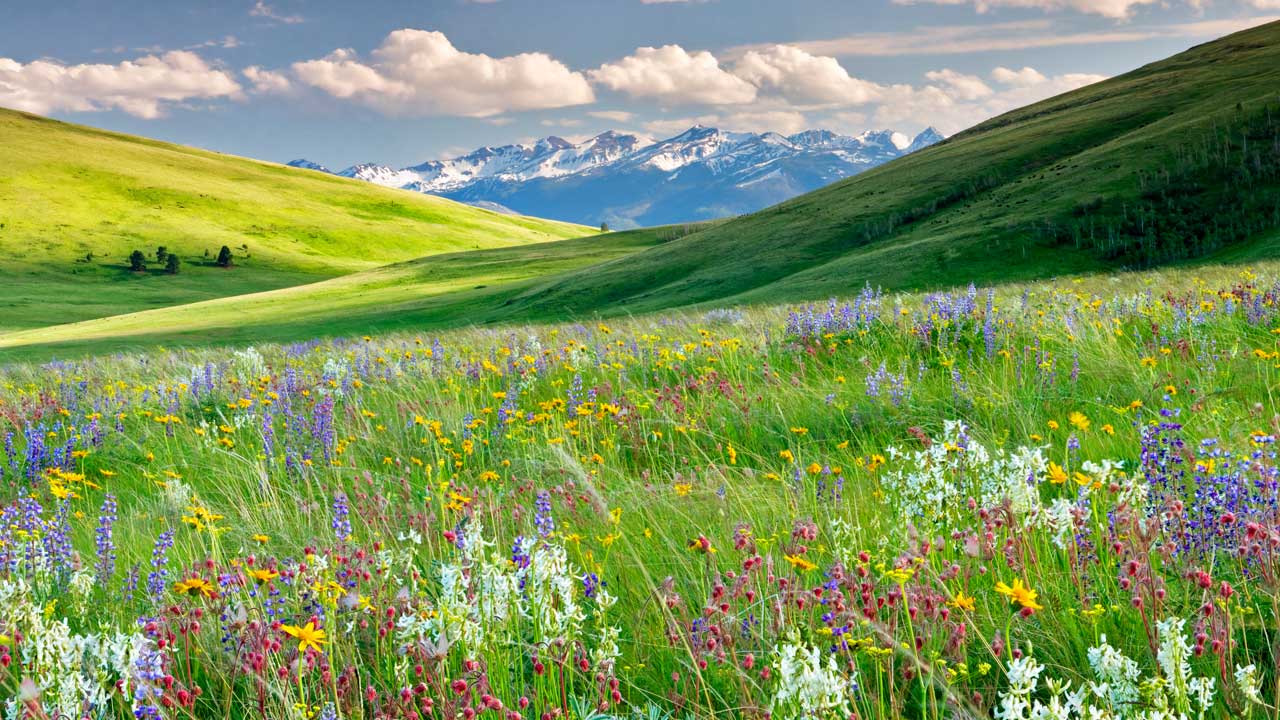
A tapestry of more than 100 wildflower species — from silky lupine to goldenrod — covers the Zumwalt Prairie Preserve in remote Northeastern Oregon. This Nature Conservancy preserve is part of the largest grassland of its type in North America, so stay on trails that are marked for public use at all times — and note that dogs are not permitted.
Portland Region
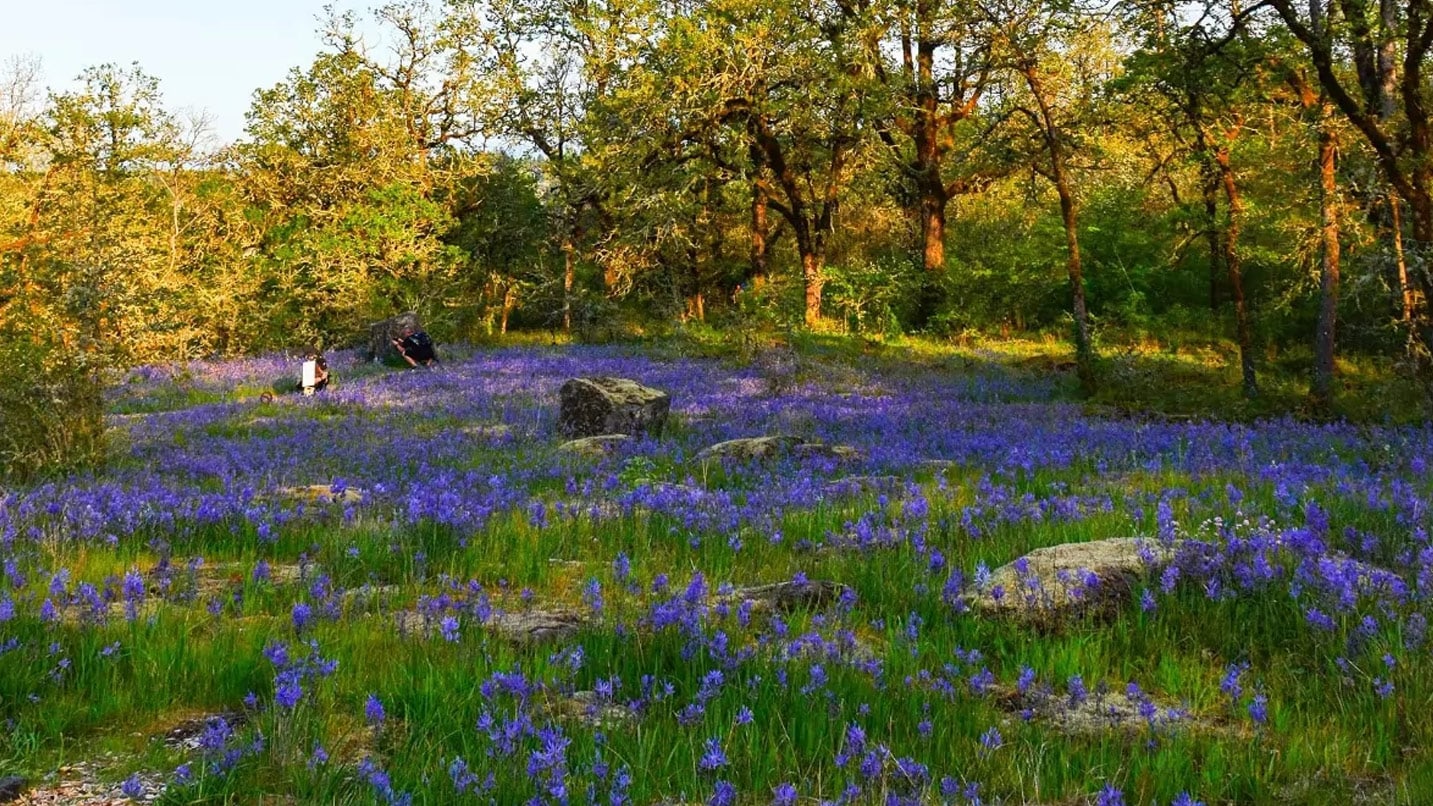
An oasis for urban hiking, the Tryon Creek State Natural Area southwest of Portland fills with trillium in April and May, and hikers can spot the white three-petaled flowers on many of the trails, including the aptly named Trillium Trail. The area features a mix of paved and dirt pathways that range from easy to moderate, so there’s something for everyone. Tucked in the neighborhoods of West Linn, the Camassia Natural Area is a lesser-known wildflower haven that is a must-visit come springtime. On the one-way, 1.4-mile loop hike, which features a boardwalk through sensitive areas, you’ll find many species of wildflower, including camas lily, blue-eyed Mary and buttercup.
In East Portland, the place to see wildflowers is atop an extinct cinder-cone volcano. Powell Butte Nature Park is home to 611 acres of meadowland and forest that is open to hikers, mountain bikers and horseback riders. In the spring, you can spot more than a dozen wildflower species, including foxglove, Oregon sunshine, dog rose and blue elderberry.
If You Go:
Follow these tips for good hiking etiquette and safety.
- Before you leave home, check the website for your destination to be sure the trails are open.
- Carry your 10 Essentials for hiking, including sunscreen, plenty of water, snacks, a first-aid kit, a downloaded map and more.
- If they are available, use the boot brushes at trail entrances before and after hiking to remove seeds that can lead to invasive weed growth.
- Always practice Leave No Trace principles when outdoors. Stay on the trail at all times, and don’t pick the flowers.
- Always check specific pet guidelines for your trail.